Brand film casting: a UK practitioner's guide

Hire a casting lead, write a tight brief, and run self-tapes into callbacks into signed releases. That sequence, done well, is the difference between a brand film that resonates and one that quietly disappears. Start today with three actions: appoint your casting lead (in-house producer, freelance casting director, or casting associate), prepare your role breakdown document, and confirm your usage territory and Equity considerations before a single actor is approached.
First three actions to take right now:
- Appoint your casting lead and agree their fee and scope before briefing anyone else.
- Draft a one-page casting brief covering role, tone, age range, key actions, usage territory, shoot dates, and pay band.
- Check UK essentials up front: whether talent is Equity affiliated, what territory and media your usage covers, and whether any minors or non-actors require additional safeguarding steps.
Get these three right and the rest of the process flows. Skip them and you will spend the back half of production, firefighting rights issues and re-casting.
Table of Contents
- Why does casting shape a brand film's tone and credibility?
- What does brand film casting actually cover?
- Real people or professional actors: which should you choose?
- How do you write an effective casting brief?
- Where do you find and book talent in the UK?
- What should you run at callbacks and chemistry reads?
- How do you manage talent on set and protect their wellbeing?
- What is a realistic casting timeline and budget for a brand film?
- Actor's guide: how to self-tape for brand film casting
- How do you measure casting's impact on a brand film's success?
- What are the most common casting challenges and how do you fix them?
- How should brand films approach diversity and inclusion in casting?
- How do you evaluate talent beyond appearance and physical type?
- How do you work effectively with casting directors and agencies?
- Key takeaways
- What casting for brand films has taught me
- Sofia Vicedomini: available for brand film bookings
- Useful sources
- FAQ
Why does casting shape a brand film's tone and credibility?
Casting is the single biggest non-script factor that shapes how an audience perceives and trusts a brand film. A script can be beautifully written; the wrong face delivering it will flatten every line. The right performer, by contrast, makes even a modest script feel alive.
Tonal mismatch is the most common and most costly casting error. A financial services brand that casts a performer whose energy reads as flippant will undermine the very credibility the film was built to establish. Conversely, a lifestyle brand that books a stiff, over-trained actor for a testimonial-style piece loses the warmth the format depends on. Hybrid production models, where live performance is woven into VFX or motion-capture workflows, add another layer: the performer must hold emotional truth while hitting technical marks.
Pro Tip: Run a 60-second voice and authenticity check before shortlisting. Ask yourself: does this performer's natural register match the brand's tone of voice document? If the answer requires imagination, keep looking.
What does brand film casting actually cover?
Casting for a brand film covers far more than booking a face. The full scope includes role definition, talent sourcing, self-tape requests, auditions, callbacks, chemistry reads, contract negotiation, usage rights clearance, and on-set talent management. Think of it as a production pipeline within the production pipeline.
The types of on-screen talent you will typically cast include:
- Real people — customers, staff, or members of the public whose authenticity is the point; common in testimonial and branded documentary formats.
- Influencers and creators — talent with existing audiences, increasingly booked directly by brands without agent representation.
Associated hires often include a casting associate to manage logistics, a self-tape coordinator to brief actors on technical requirements, and a reader to feed lines off-camera during auditions. Deliverables from the casting process include sides (script excerpts for auditions), a slate format, and an availability matrix showing confirmed talent windows against shoot dates.
Real people or professional actors: which should you choose?
Choose professional actors for scripted, high-emotion, or technically demanding performances. Choose real people for testimonials, internal communications, and branded documentary work where lived experience is the story. The decision is rarely binary; many brand films use both, pairing a professional presenter with real customer voices.
| Dimension | Professional actors | Real people |
|---|---|---|
| When to use | Scripted scenes, emotional arcs, technical shoots | Testimonials, internal comms, documentary formats |
| Sourcing route | Agent submission, Spotlight, Casting Networks, Mandy | Direct outreach, staff networks, social media calls |
| Time to hire | 1–2 weeks from brief to booking | 2–4 weeks (consent, rehearsal, and coaching add time) |
| Typical process steps | Brief, self-tape, callback, chemistry read, contract | Brief, interview/screen test, consent, coaching session |
| Rights and usage | Standard performer contract; Equity guidance applies | Image release, GDPR-compliant consent form required |
Pro Tip: Test authenticity in self-tapes by asking real people to answer one unscripted question about the brand or product before reading any sides. The contrast between the two reads tells you everything about their natural camera presence.
When you are genuinely unsure, schedule a brief screen test. Thirty minutes on a camera with a director present will resolve most debates that a self-tape cannot.
How do you write an effective casting brief?
A tight brief reduces casting time and improves shortlist quality. The absolute must-have fields are:
- Role name and objective
- Tone and character direction
- Age range and look notes
- Key actions required on screen
- Usage territory and media
- Shoot dates and location
- Pay band and buyout structure
- Accessibility requirements
Sample role description: "We are looking for a woman, 30–45, warm and authoritative, to front a 90-second brand film for a UK fintech company. She should feel like a trusted friend who happens to know a lot about money. No heavy financial jargon; the tone is conversational and reassuring. Key action: deliver two pieces to camera and one product interaction sequence. Usage: UK digital and social, 12 months."
Casting brief checklist:
- Confirm the role name and number of performers required.
- Write a one-paragraph character description (tone, energy, not just physical look).
- State age range and any specific look requirements relevant to the brief.
- List key on-screen actions (piece to camera, product demo, dialogue with another performer).
- Confirm usage: territory, media channels, and duration.
- State shoot date, location, and session length.
- Include the pay band or day rate range.
- Note any accessibility requirements or special skills needed.
- Attach sides or a sample script excerpt for self-tape direction.
- Add a submission deadline and preferred format (self-tape specs, slate instructions).
Translate brand tone into direction cues. "Confident but not corporate" is more useful to a performer than "professional." Pay expectations should reflect the usage scope: a 12-month UK-wide digital buyout commands a meaningfully higher fee than a single-event internal video.
Where do you find and book talent in the UK?
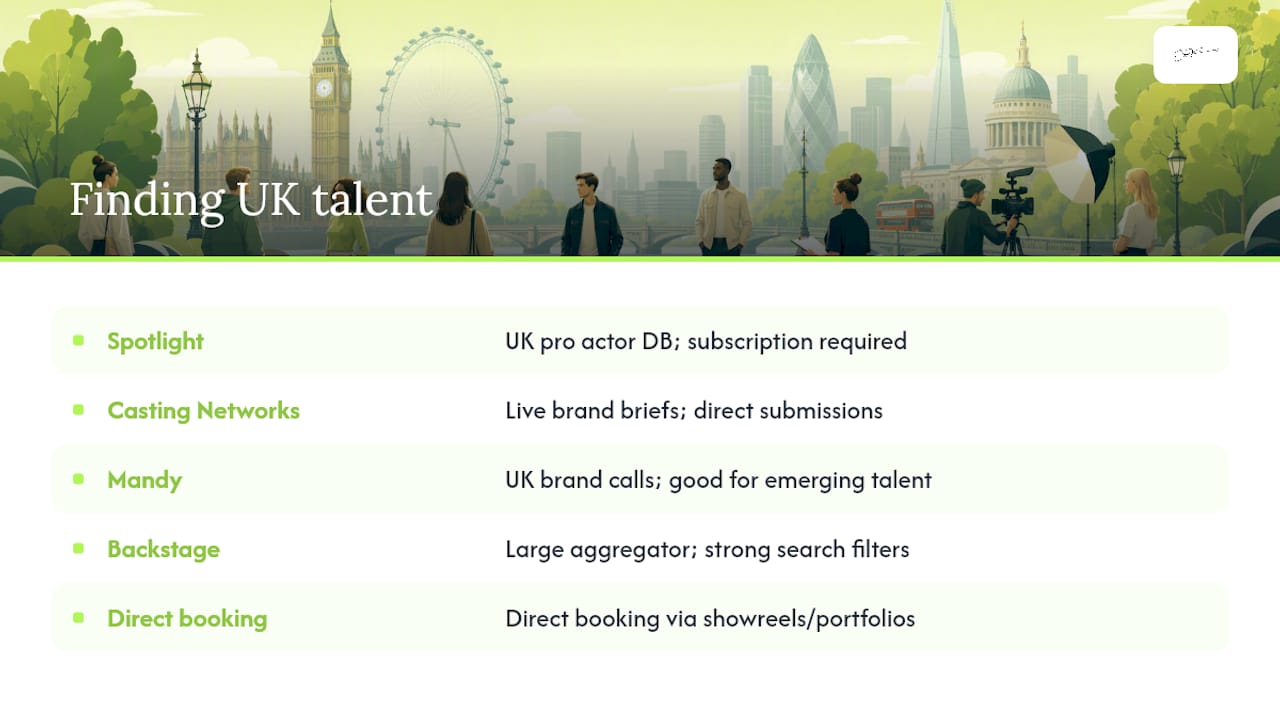
Combine platform discovery with targeted agent outreach and direct approaches. No single channel covers every type of talent; the best casting leads use two or three in parallel.
Spotlight is the UK's primary professional actor database, used by virtually every casting director working in film and television. Access requires a subscription, but the shortlisting and self-tape request tools are worth the cost for any production with a meaningful budget.
Casting Networks hosts live brand and corporate briefs across the UK and international markets, with project pages that show role descriptions, character notes, and pay ranges. It is particularly useful for producers who want to post a brief and receive direct submissions without going through an agent.
Mandy publishes UK-oriented brand film casting calls, including local shoots and detailed role breakdowns. It skews towards independent productions and is a strong channel for finding emerging talent and crew simultaneously.
Backstage aggregates thousands of casting calls including brand film and social ad roles, and is used by UK and international producers alike. Its search filters make it straightforward to find talent by location, type, and availability.
Starnow lists paid brand film roles across global markets, with transparent pay disclosure on many postings. It is a useful benchmark for understanding flat-rate pay norms across different regions.
For direct routes, brands are increasingly booking on-camera talent without agent involvement, particularly for creator-led and social ad formats. Showreels hosted on Vimeo and professional portfolio sites give casting teams a fast read on delivery style and camera presence before any formal submission.
What should you run at callbacks and chemistry reads?
Run direction resistance checks, alternate reads, scene pairings, and a short chemistry sequence at callbacks. Schedule screen tests for technical roles or any scene involving stunts, motion capture, or complex product interaction.
Exercises to run at callbacks:
- Paired reads with a reader or another shortlisted performer to test listening and reaction.
- In-camera coverage checks: ask the performer to repeat a key line from different angles to assess their instinct for the lens.
- A wardrobe sample: put them in the approximate costume and see how they carry it.
- Live improv around the brief's scenario to test adaptability under gentle pressure.
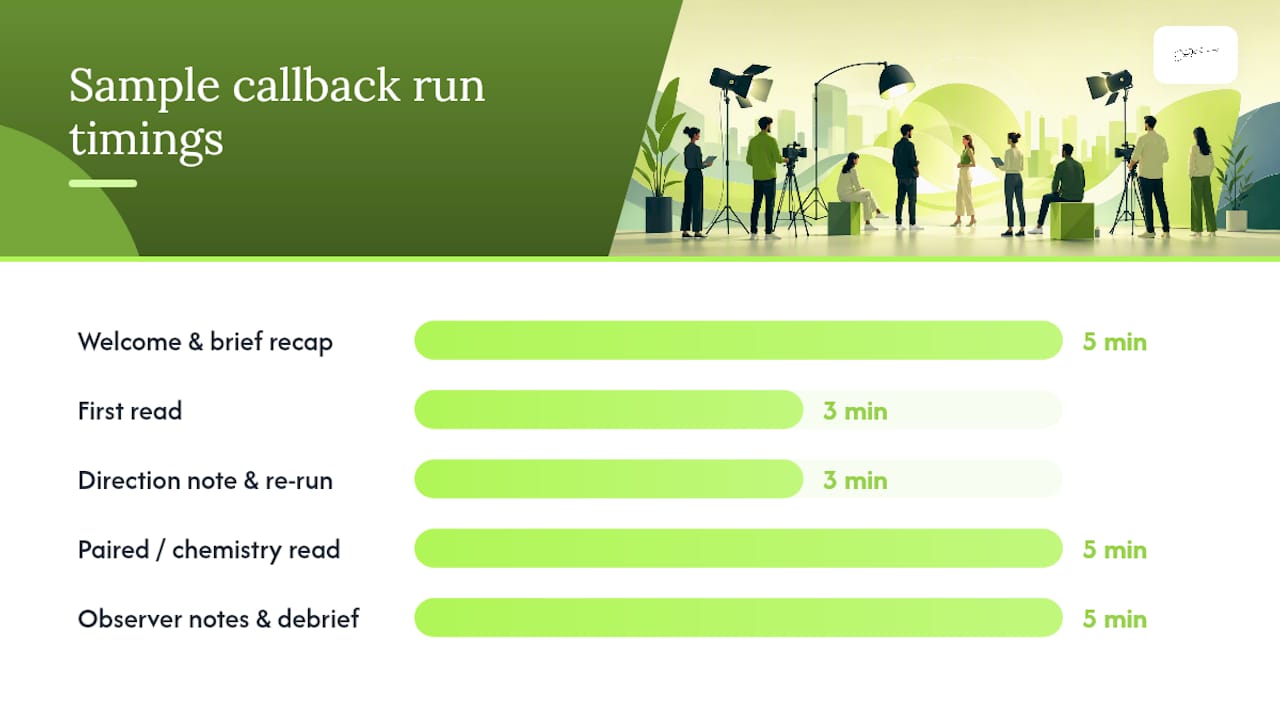
Sample callback run sheet:
- Welcome and brief recap (5 minutes).
- First read: performer delivers the sides as prepared (3 minutes).
- Direction note: give one specific adjustment and run again (3 minutes).
- Alternate read: ask for a lighter or more grounded version (3 minutes).
- Paired sequence or chemistry read if applicable (5 minutes).
- Observer notes and debrief (5 minutes).
The director, a client representative, and the casting lead should all attend. Record every session with the performer's consent. Notes taken immediately after each session are far more reliable than memory at the end of a long day.
How do you manage talent on set and protect their wellbeing?
Plan logistics and safeguarding before the booking is confirmed, not after. Call times, access requirements, welfare lead, and consent documentation for non-actors should all be resolved at the contracting stage.
On-set logistics checklist:
- Confirm call times and build in adequate travel and preparation time.
- Arrange accessible transport and location access for all performers.
- Schedule hair, make-up, and wardrobe time before camera call.
- Designate a welfare lead responsible for performer wellbeing throughout the day.
- Build regular breaks into the shooting schedule; do not sacrifice them under time pressure.
- For minors: appoint a licensed chaperone, confirm working hours comply with UK child performance regulations, and obtain written parental consent.
- For non-actors: provide a written consent form covering image use, GDPR data processing, and the specific ways their likeness will be used.
Non-actors often arrive on set nervous and under-rehearsed. Give them a dedicated warm-up session before camera rolls. A brief coaching conversation about what "natural" looks like on screen, combined with a few low-stakes run-throughs, will protect both their confidence and the quality of the footage.
What is a realistic casting timeline and budget for a brand film?
The minimum realistic timeline for a standard brand film is 2–3 weeks from brief to booking. Complex or union productions require 4–6 weeks.
| Phase | Typical duration | Decision checkpoint |
|---|---|---|
| Brief preparation | 2–3 days | Brief signed off by director and client |
| Talent sourcing | 3–5 days | Longlist of 15 candidates confirmed |
| Self-tape review | 3–5 days | Shortlist of 4–6 candidates per role |
| Callbacks and chemistry reads | 1–2 days | Final 1–2 candidates per role identified |
| Contracting and releases | 3–5 days | Signed contracts and releases in hand |
Budget line items to include:
- Casting director or associate fee.
- Platform subscription costs (Spotlight, Casting Networks).
- Self-tape coordination (brief distribution, technical guidance).
- Performer day rates or flat buyouts.
- Travel and accommodation for talent where required.
- Extras and supporting artist fees.
- Usage rights buyout (often the largest single line item for hero roles).
- Contingency of 10–15% on the total casting budget.
Casting typically represents a meaningful proportion of a brand film's above-the-line budget. Skimping here rarely saves money; it usually generates re-shoot costs instead.
Actor's guide: how to self-tape for brand film casting
Treat a self-tape like a live audition. The casting team is watching for the same things they would look for in the room: presence, believability, and whether you feel right for the brand.
Self-tape checklist for actors:
- Record your slate first: name, agent (if applicable), and a brief note on your availability and any relevant usage rights you hold.
- Use a neutral background; avoid busy patterns or distracting environments.
- Frame from the chest up; keep the camera at eye level.
- Light from the front; a ring light or a window facing you is sufficient.
- Record two takes: one full read as directed, one lighter or more grounded alternative.
- Keep total submission length to 60–90 seconds per take.
- Note your availability dates and any exclusivity conflicts in the submission email.
For testimonial-style briefs, the lighter read is often the one that books. Casting directors for brand films are looking for conversational warmth, not theatrical projection. For scripted pieces, show that you can take a direction note by making the second take genuinely different from the first.
Pro Tip: Annotate your submission email with one line about your experience with the brand's category (e.g., "I've worked on three fintech campaigns and understand the tone"). It takes 30 seconds and immediately differentiates you from the pile.
How do you measure casting's impact on a brand film's success?
Measuring the impact of casting on a brand film is less straightforward than measuring media spend, but it is far from impossible. The most direct method is audience response testing: show two versions of the same scene, one with the booked performer and one with an alternative, and measure recall, trust scores, and purchase intent. This is standard practice in larger brand campaigns and increasingly accessible to mid-budget productions through online panel tools.
Qualitative signals matter too. Client and director feedback during the shoot, the number of takes required to achieve a usable performance, and the ease of the edit are all proxies for casting quality. A performer who delivers consistently across multiple setups reduces post-production time and cost in ways that show up clearly in the budget.
Longer-term, track whether the film's on-screen talent becomes associated with the brand in audience memory. Performers who embody a brand's values tend to generate organic social engagement and repeat booking requests, both of which are measurable outcomes.
What are the most common casting challenges and how do you fix them?
The most frequent challenge is a mismatch between the brief and the submissions received. This almost always traces back to a vague or incomplete casting brief. Tighten the direction cues, add a sample reference clip, and reissue.
Availability conflicts are the second most common problem, particularly for productions with compressed timelines. Build a parallel shortlist of two or three alternatives per role from the outset; never enter contracting with a single option.
Budget misalignment, where talent expectations exceed the production's offer, is best resolved early by stating the pay band clearly in the brief. Transparency at the sourcing stage saves significant time and protects relationships with agents and performers alike.
Finally, chemistry reads that fail to generate a clear winner are more common than producers expect. When two performers are genuinely equal on paper, put them in a room together and watch what happens between them. The answer is usually obvious within five minutes.
How should brand films approach diversity and inclusion in casting?
Diversity in brand film casting is not a compliance exercise; it is a creative and commercial decision. Audiences are more likely to trust and engage with films that reflect the breadth of the communities they belong to. Casting that defaults to a narrow demographic range signals, often unintentionally, that the brand is not speaking to everyone.
Build inclusion into the brief from the start. Specify that submissions should reflect the full range of ages, ethnicities, body types, and abilities relevant to the brand's audience, and make that instruction explicit to every sourcing channel you use. Platforms like Casting Networks and Mandy allow you to filter and search across a wide talent pool; use those filters actively rather than relying on the first submissions that arrive.
Avoid tokenism by casting authentically across the full cast, not just in one visible role. A brand film with a diverse hero and a homogeneous supporting cast is not inclusive casting; it is a missed opportunity.
How do you evaluate talent beyond appearance and physical type?
The most common casting mistake in brand films is over-indexing on look and under-indexing on skill. A performer who matches the brief's physical description but cannot deliver a natural piece to camera will cost you time and money on set.
Evaluate every performer on three dimensions beyond appearance: vocal quality and delivery rhythm, adaptability under direction, and brand alignment. Vocal quality matters because brand films are often consumed on mobile with headphones; a performer whose voice carries warmth and clarity at low volume is a practical asset. Adaptability shows up in callbacks when you give a direction note and watch whether the performer genuinely adjusts or simply repeats the same read louder. Brand alignment is subtler: does the performer's natural energy, the way they hold themselves and speak when not performing, feel consistent with what the brand stands for?
Start casting from the script and storyboard, not from headshots. Identify the skills each scene requires before you open submissions, and score against those skills first.
How do you work effectively with casting directors and agencies?
The most productive casting relationships are built on clarity and trust, in that order. Give a casting director a complete brief, a realistic budget, and a clear decision-making timeline, and they will return a shortlist that saves you significant time. Withhold any of those three and you will spend the next two weeks managing confusion.
Brief the casting director as you would brief the director: share the brand's tone of voice document, reference films you admire, and be specific about what you do not want as well as what you do. The negative brief is often more useful than the positive one.
Agree on a feedback protocol before self-tapes arrive. Casting directors need timely, specific feedback to refine the shortlist; "not quite right" is not feedback. "Too polished, we need someone who feels less rehearsed" is. Respect the casting director's professional judgement; they have seen more self-tapes than you have, and their instincts about what will work on camera are usually worth listening to.
Key takeaways
Effective brand film casting requires a tight brief, the right sourcing mix, and a clear rights structure confirmed before a single performer is booked.
| Point | Details |
|---|---|
| Brief quality determines shortlist quality | A complete brief with tone, usage, and pay band reduces casting time and improves submissions. |
| Combine sourcing channels | Use Spotlight, Casting Networks, Mandy, and Backstage in parallel for the widest and fastest talent pool. |
| Rights and releases are non-negotiable | Confirm territory, media, duration, and exclusivity in writing before any performer is contracted. |
| Diversity starts in the brief | Build inclusion requirements into the casting brief and every sourcing channel instruction from day one. |
| Sofiavicedomini offers depth and versatility | For casting directors seeking a performer who can move between scripted, testimonial, and presenter formats, Sofiavicedomini brings the emotional range and camera confidence that brand films demand. |
What casting for brand films has taught me
The conversation around casting in brand films tends to focus on process: platforms, briefs, callbacks, contracts. All of that matters. But the thing that actually determines whether a brand film works is something quieter and harder to systematise: whether the performer in front of the camera genuinely believes what they are saying.
I have watched beautifully produced films fall flat because the casting prioritised look over conviction. And I have seen modest productions punch well above their weight because the performer brought something real to the frame. The brief, the self-tape rubric, the callback structure — these are tools for finding that quality, not substitutes for it.
The most useful shift a casting team can make is to stop asking "does this person look right?" first and start asking "does this person feel right?" The look can be shaped by wardrobe, lighting, and direction. The feeling either comes through the screen or it does not.
For actors approaching brand film work: the brands that book you repeatedly are the ones where your natural energy and the brand's values are genuinely aligned. That alignment is not something you perform. It is something you either have or you do not, and the self-tape is where it shows.
Sofia Vicedomini: available for brand film bookings
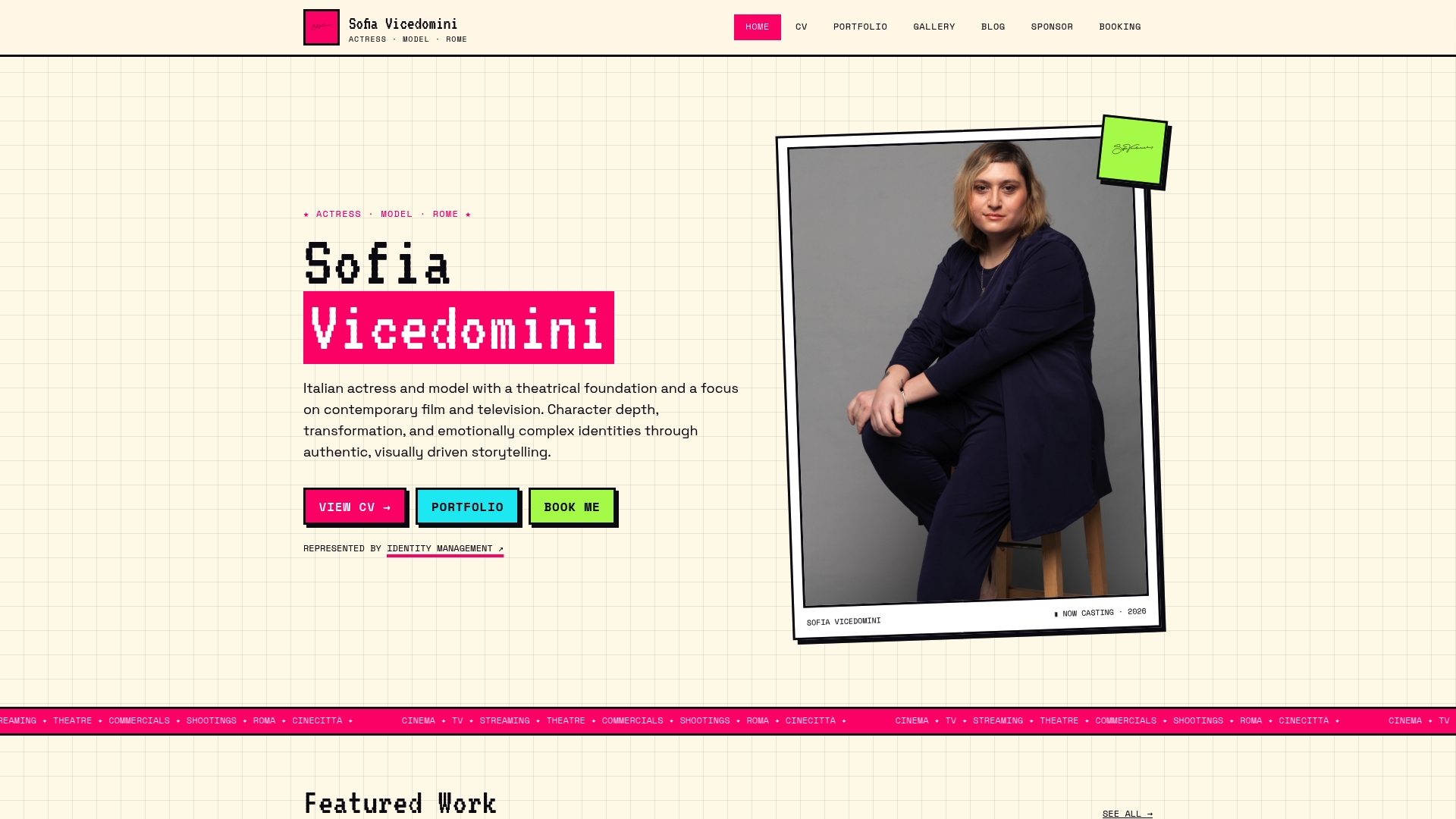
If you are a casting director or producer looking for a performer who can hold a scripted piece to camera with emotional precision and then pivot to a warm, conversational testimonial read in the same session, Sofiavicedomini is worth a serious look. With a background spanning contemporary film, television, theatre, and commercial work, she brings the kind of versatility that brand films genuinely need: the ability to inhabit a character fully while staying responsive to direction and brand tone.
The booking process is straightforward. Visit sofiavicedomini.me to view her portfolio, showreel, and availability. Enquiries for brand film, commercial, and presenter roles are welcome directly through the site. Whether you are casting a hero role for a national campaign or a presenter-led piece for a digital series, reach out early in your casting process to check availability and discuss the brief.
Useful sources
For UK legal and industry guidance, Equity and the BFI are the authoritative starting points. For talent discovery, Casting Networks, Mandy, and Backstage cover the widest range of UK brand film briefs.
- Corporate Video Project — Casting Networks
- Grüns | Nütrops — Casting Networks
- Discover Casting Calls, Auditions, and Other Great Jobs on ..
- Brand Film Casting Call | Not on the High Street
- Brand Film Casting Call | Screencraft
- equity.org.uk
- bfi.org.uk
- Creator Casting: How Brands Are Booking On-Camera Talent Without Reps — Up-To-Date Actor
- How Happy Socks’ Epic Story Took Flight With a New Kind of Craft | LBBOnline
- Casting for Brand Film: Why It Matters More Than You Think
FAQ
What is the typical timeline for brand film casting in the UK?
A standard brand film cast takes 2–3 weeks from brief to booking. Complex or union productions require 4–6 weeks.
Do I need to use Equity performers for a UK brand film?
Not always, but checking Equity guidance is advisable for any production with a broadcast or significant digital release, as union considerations affect contract terms and minimum rates.
What platforms are best for sourcing brand film talent in the UK?
Spotlight, Casting Networks, Mandy, and Backstage are the most widely used. Combining two or three in parallel gives the broadest and fastest shortlist.
When should I use real people instead of professional actors?
Use real people for testimonials, branded documentary formats, and internal communications where lived experience and authenticity are the primary creative asset.
How can I book Sofiavicedomini for a brand film?
Visit sofiavicedomini.me to view her showreel and portfolio, then submit a casting enquiry directly through the site with your brief and shoot dates.