Callback interview questions: a casting team's practical playbook

Callbacks exist to confirm three things: consistency, flexibility and castability. A first audition tells you someone can act; a callback tells you whether they can hold that performance under direction, adjust it on request, and fit the room they'll be working in for weeks or months. The best callback questions are predictable once you know what they're built to test.
- Consistency — does the actor reproduce the choice that got them here, or was the first tape a fluke?
- Flexibility — can they take a note and apply it in real time, without losing the character?
- Castability — will they be easy, reliable and collegial across a production schedule?
Favour questions that test how someone takes direction over questions that only test technical polish. A perfectly executed accent means little if the actor can't shift tone when the director asks for something warmer on the second take.
TL;DR:
- Every callback should focus on testing actors' ability to adapt to direction, especially through live adjustments that reveal flexibility rather than just technical polish.
- Questions about process, character interpretation, and technical needs must be tailored to specific role requirements and used to gauge genuine engagement and suitability.
- A weighted scoring system emphasizing consistency, directability, and ensemble fit helps establish a fair, defendable shortlist rather than relying on gut feeling alone.
- Visual and performative consistency between rounds is essential, with changes in appearance or energy needing clear explanations to avoid confusion.
- Providing specific, timely feedback after callbacks strengthens actors' relationships with casting teams and helps improve future auditions.
Table of Contents
- Callback interview question categories and what they reveal
- A ready-to-use callback question bank
- How to run the room: asking questions and taking notes
- A simple scoring sheet for comparing finalists
- Chemistry reads, self-tapes and remote callbacks
- Wardrobe, continuity and visual consistency across rounds
- What actors should prepare before a callback
- How casting teams decide who gets a callback
- First audition versus callback questions: what changes
- How actors can respond well to callback questions
- Giving actors feedback after a callback
- What I look for in a callback room
- Book Sofia Vicedomini for your next callback
- Key Takeaways
- Sources
- FAQ
Callback interview question categories and what they reveal
Every callback question falls into one of five buckets, and each one is diagnostic for something different. Knowing which bucket you're drawing from stops a callback turning into a scattershot chat.
- Process and methodology. Questions like "How do you like to work?" or "What's your training background?" surface how an actor prepares and whether their process suits your rehearsal timeline. A confident answer is specific, not a rehearsed platitude, and it references actual habits rather than name-dropping schools.
- Character and story interpretation. Asking what an actor believes their character wants in a scene reveals how deeply they've read the material. Strong answers connect a choice to the story's stakes, not just the character's mood.
- Availability and logistics. Confirming shoot dates, travel constraints and conflicting commitments early avoids a booking collapse two weeks before production. These are quick, factual checks, not interpretive ones.
- Physicality, look and technical needs. Wardrobe fit, dialect ability, stunt comfort and any technical skill the role demands deserve direct, practical questions when the role hinges on them.
- Adaptability and collaboration. Ask an actor to run the scene again with a specific adjustment. This is the single most revealing category, because directors routinely use this exact technique to test responsiveness rather than to catch anyone out. Phrase it as a genuine creative note, not a trap: "Try that again, but let her enjoy the lie a little" tells you far more than "Are you flexible?"
A ready-to-use callback question bank
These are grouped so you can pull the right question for the moment, whether you're in a chemistry read, reviewing a self-tape, or alone in the room with a director.
Process and background
- "Walk me through how you built this character." Listen for specifics, not generic craft language.
- "What's your rehearsal process when you've only had sides for a day?" Good answers show discipline under time pressure.
Character and interpretation
- "What does she want in this scene that she's not saying out loud?" Best used director-only, since it invites a longer creative exchange.
- "How did you decide on that pause before the confession line?" Small, focused questions like this signal genuine engagement, and the sharpest actors will ask you something similarly precise back.
Availability and logistics
- "Are you free for the full shoot block in March, including weekends?" Suited to any setting; answer should be immediate, not vague.
- "Any scheduling conflicts we should know about now?" A confident actor names them upfront rather than hedging.
Physicality and technical
- "Can you hold a consistent regional accent for a full scene?" Best tested live or on a clean audio take.
- "How's your comfort level with the stunt work in scene four?" Ideal for taped callbacks where you can review technique frame by frame.
Adaptability
- "Try it again, but slower, like she's holding something back." This works best face-to-face or on a live video callback where you can watch the adjustment happen in real time.
Pro Tip: Save one adaptability question for last. Actors relax once they think the "test" is over, and that's exactly when you see their honest reaction to a note.
How to run the room: asking questions and taking notes
Sequence matters more than most casting teams admit. Confirm logistics first, quickly and without ceremony, then move into interpretive and directability questions once the actor has settled into the scene. Asking about availability after an emotionally demanding read jars the mood and wastes the goodwill you've just built.
Avoid permission-seeking prefaces like "Would it be alright if I asked you to try something?" Direct, project-specific follow-ups read as more professional and save time: "Give me that line again, angrier." Efficient teams also skip questions the actor could already answer from materials you sent, since asking about information already provided signals disorganisation more than diligence.
A three-field note template keeps your callback sheet usable weeks later when you're comparing dozens of actors:
- Immediate impression — one line, gut reaction, no second-guessing.
- Direction response — what changed when you gave a note, and how fast.
- Recommendation — book, callback again, or pass, with a one-sentence reason.
Teams that use a structured sheet like this compare finalists far more fairly than those relying on memory after a long day of callbacks.
A simple scoring sheet for comparing finalists
A short, weighted scoring sheet turns a room full of gut feelings into a defensible shortlist. Five axes cover what actually predicts a good hire.
- Consistency (25%) — does the callback performance match what got them here?
- Directability (25%) — how fast and how well do they apply a note?
- Ensemble fit (20%) — industry guidance consistently frames callbacks as a test of fit and reliability, not just raw skill, so weight this seriously rather than as a tiebreaker.
- Technical match (20%) — accent, physicality, stunt or skill requirements specific to the role.
- Professionalism (10%) — punctuality, preparation, how they handle notes and feedback.
Score each axis out of five, multiply by its weight, and total the result. Anyone scoring low on directability despite a strong first score is a red flag worth discussing, since a performance that can't move under direction rarely improves in production.
| Point | Details |
|---|---|
| Weight directability heavily | Score how fast an actor applies a note as highly as raw performance quality. |
| Watch for rigid consistency | An actor who can't vary a choice slightly on request is a genuine red flag. |
| Note unexplained appearance changes | Large, unexplained shifts from the first audition tape often cause confusion and hurt booking chances. |
Chemistry reads, self-tapes and remote callbacks
Chemistry reads shift your attention away from the individual actor and towards the pairing. Watch how two actors listen to each other, not just how well each delivers lines, and keep the group in the room small, ideally just the director and one casting lead, so the actors can settle into an actual rhythm together.
- Framing and eyeline. Confirm the actor is shooting to the correct eyeline for the scene partner, whether that's camera or an off-screen reader.
- Lighting and sound. Basic, even lighting and clean audio matter more than production value; a self-tape checklist covering framing, sound and file naming saves your team from unusable submissions.
- File naming and upload instructions. Require a consistent naming convention (surname, role, take number) so nothing gets lost across dozens of submissions.
For chemistry specifically, ask questions that don't interrupt the read itself: "What do you think she's protecting by staying quiet here?" works better asked before the scene than during it.
Pro Tip: If you're reviewing self-tapes rather than live reads, watch the first three seconds after "action" is called. Hesitation there often predicts hesitation under real direction.
Wardrobe, continuity and visual consistency across rounds
A callback isn't just a second performance, it's a second look, and unexplained changes between rounds create genuine confusion for casting teams. Visual continuity matters because large, unexplained shifts in appearance between the first audition and the callback frequently make it harder for a team to picture the actor as the character they originally responded to.
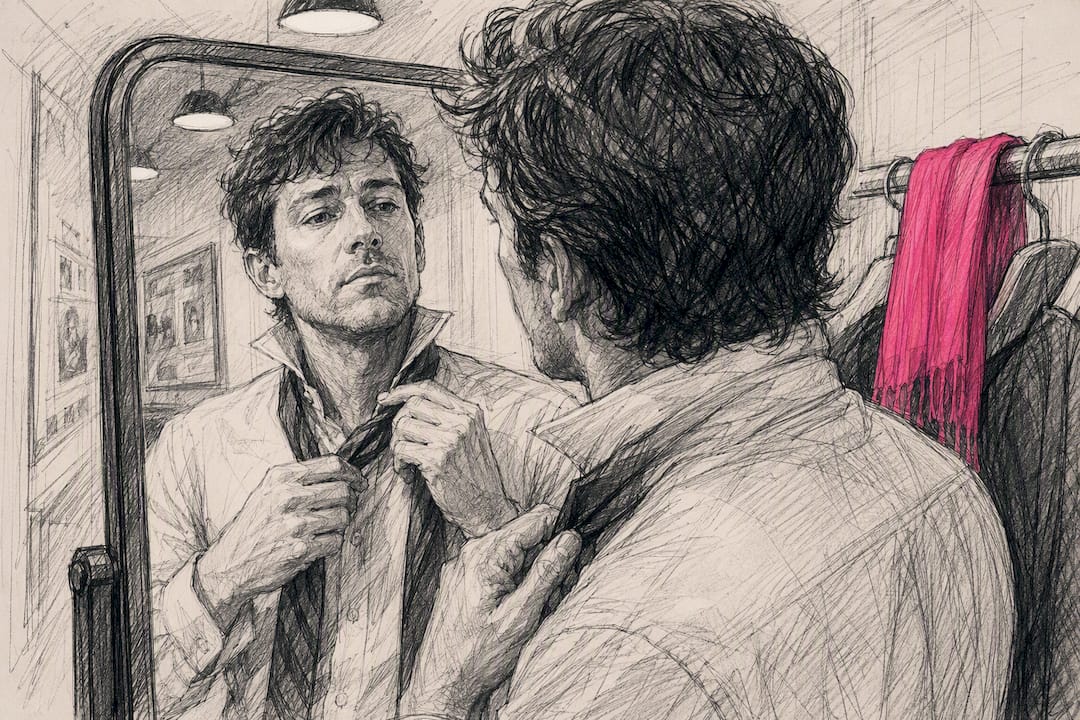
That doesn't mean actors should arrive in full costume, but it does mean drastic changes deserve a heads-up. A haircut, a beard grown or shaved, a dramatic wardrobe departure from what got them the callback in the first place: any of these should come with a one-line note in the confirmation email, not a surprise in the room.
For roles with specific physical requirements, whether a period drama needing a particular silhouette or a commercial needing a consistent brand look, ask actors to wear something close to the tone of the role rather than costume-accurate. Neutral, well-fitted clothing in a colour that suits the character usually photographs and reads better than an over-literal interpretation.
Performative consistency matters just as much as visual consistency. If an actor's callback energy, pacing or vocal choices diverge wildly from the tape that earned them the invitation, that's worth a direct, friendly question rather than a silent mark against them. Sometimes it's nerves; sometimes it's a genuine reinterpretation worth exploring. Either way, naming the shift out loud gives the actor a chance to explain it, and gives you better information than guessing.
What actors should prepare before a callback
Actors who prepare well make your job considerably easier, and it's worth knowing what strong preparation actually looks like so you can spot its absence.

The strongest approach preserves the choice that earned the callback in the first place, rather than reinventing the character from scratch. Effective preparation means keeping the successful core of the first audition intact while building two or three specific, playable adjustments that a director could plausibly ask for. An actor who shows up having only rehearsed one fixed interpretation tends to freeze when asked to shift it.
If the sides have changed since the first round, well-prepared actors treat that as information rather than a setback. Changes to material are usually a clue about what the team is testing, whether that's chemistry, range, or comfort with a technical demand, not a sign the actor did something wrong first time round.
Practically, that means arriving having rehearsed transitions between choices, not just the choices themselves, and having thought through wardrobe, availability and any technical requirements in advance so those questions get answered instantly rather than fumbled. Actors who ask one or two small, specific questions about character or tone before starting tend to read as more engaged than those who launch straight in or ask nothing at all.
How casting teams decide who gets a callback
The decision to bring someone back rarely rests on a single strong take. It usually comes down to whether the first audition showed a genuine, specific choice rather than a technically competent but generic reading. An actor who made one bold, well-reasoned decision about a character, even an imperfect one, tends to get called back over someone who played it safely correct.
Teams also weigh practical fit at this stage: does the actor's look, age range and energy sit believably alongside actors already cast or shortlisted for related roles? A brilliant read that doesn't sit right next to an already-cast lead can still lose out here, which is why casting decisions at this stage are rarely about talent alone.
Availability and reliability signals from the first round matter too. An actor who was late, unprepared, or vague about scheduling in round one is a harder sell for a callback slot, even with strong tape, because callbacks are expensive in time and coordination for a production team already stretched thin.
First audition versus callback questions: what changes
The first audition is largely diagnostic: can this person act the part at all? Questions there, when asked, tend to be brief and functional, covering availability, representation and basic technical range. There's rarely time or need for deep interpretive discussion when you're seeing dozens of actors in a day.
Callback questions do heavier lifting. They test whether a good first impression holds up under scrutiny and direction, which is precisely why casting interviews at this stage lean so heavily on notes and adjustments rather than repeat performances of the same read. You're no longer asking "can they do this?" You're asking "can they do this differently, reliably, and alongside other people?"
Expect callback questions to be more personal too. Casting directors sometimes ask lighter, icebreaker-style questions specifically to gauge collegiality rather than craft, since a room full of talented but difficult people rarely produces a smooth production.
How actors can respond well to callback questions
The strongest responses to callback questions share a common trait: specificity. An actor who answers "What's your process?" with a genuine habit, rather than an industry cliché about "living in the character," immediately reads as more credible.
When asked to adjust a scene, the best response applies the note visibly and quickly, without over-explaining or checking whether the adjustment was "right" before attempting it. Asking clarifying questions is fine, even valued, but only when they're small and specific. A focused question about a character's motivation or a scene's tone shows genuine engagement, while a vague "so what are you looking for?" suggests the actor hasn't done their own thinking yet.
Actors should also resist the urge to defend a choice when given a note that changes it. A quick, curious "got it, let me try that" reads far better than a justification for why the original choice was correct.
Giving actors feedback after a callback
What you say after a callback shapes an actor's relationship with your casting office long after this particular role is filled, so it's worth doing properly even under time pressure.
Specific feedback, even brief, is more useful than a generic pass. "We loved the read but went a different direction on age range" tells an actor something they can actually use next time; a bare "thanks for coming in" tells them nothing. Where the decision hinged on a note they struggled to apply, saying so plainly, without unkindness, helps more than vague reassurance.
Timing matters almost as much as content. Actors and their representation generally appreciate a decision within a reasonable window rather than silence stretching for weeks, even when the answer is a pass. A short, timely note maintains goodwill for future projects far better than a delayed one, however polished.
What I look for in a callback room
Range on paper means little to me until I've been asked to shift it live. What I value most is a director's note landing and changing something real in the performance within a take or two, not a perfectly reproduced first audition. I've built my own process around holding a core choice while staying genuinely open to adjustment, whether that's a theatre transfer, a screen role, or an interactive live piece where the "scene" changes with every audience.
You can see that range across my reels and recent credits, which sit alongside my full CV for verification.
— Sofia
Book Sofia Vicedomini for your next callback
If your callback questions are testing consistency under direction, range across tone, and genuine ease in an ensemble, Sofia Vicedomini's background across film, television, theatre and interactive live events is built for exactly that brief. She works confidently in chemistry reads, taped callbacks, and director-only sessions alike, and adapts fast when a note changes the shape of a scene mid-read.
Her full reel, CV and booking details are available for casting teams who want to see range and directability before extending a callback invitation. If you're casting for a project in Italy or further afield and want to see how she handles a specific adjustment live, get in touch through her landing page to request availability or a tailored self-tape for your role.
Key Takeaways
Callback questions work best when they test directability and fit rather than repeating first-round technical checks.
| Point | Details |
|---|---|
| Match question to category | Use process, character, logistics, physicality or adaptability questions depending on what you still need to confirm. |
| Test directability directly | Ask for a live adjustment rather than relying on a repeated read to judge flexibility. |
| Score against five weighted axes | Rank consistency, directability, ensemble fit, technical match and professionalism to build a defensible shortlist. |
| Flag unexplained visual changes | Note any major shift in appearance since the first audition rather than letting it cause silent confusion. |
| Consider Sofia Vicedomini | Her range across film, television and theatre suits callbacks testing consistency, directability and ensemble fit. |
Sources
- What to Expect From a Casting Interview | Backstage
- How to ace a callback audition? | Acting Magazine
- How to prepare for a callback that books | CastingActorsCast
FAQ
What are callback interview questions for?
They confirm consistency, flexibility and castability, testing whether an actor's first audition choice holds up under direction and alongside other cast members.
What's the most revealing type of callback question?
Questions that ask an actor to apply a specific note in real time, since directors routinely use this to test adaptability rather than repeat technique checks.
How many questions should a callback include?
Enough to cover process, character interpretation, logistics and one adaptability check, usually four to six questions alongside the read itself, not a long interview.
Should casting directors give feedback after every callback?
Specific, timely feedback, even a brief note on why a decision went another way, maintains goodwill far better than silence or a generic thank you.
How is a callback different from a first audition?
First auditions test basic suitability; callbacks test whether that suitability holds under notes, adjustments and closer scrutiny of fit with the wider cast.