Cross-cultural casting: history, ethics, and practice

Cross-cultural casting is the deliberate assignment of roles across cultural, racial, or identity lines to serve artistic, political, or commercial aims. It is one of the most contested and creatively generative practices in contemporary theatre and film, and its history stretches back centuries, long before Lin-Manuel Miranda put a racially diverse cast on the Hamilton stage.
- When it can be ethically justified: When the casting choice is intentional, the portrayed community is consulted from the outset, and the decision enriches the work's meaning rather than erasing lived experience.
- The main risks to avoid: Tokenism, stereotyping, and the use of exclusionary language in casting notices (the phrase "No Accent" being a prime example) are the three most consistent failure points documented by practitioners.
- Who to consult early: Community advisors, cultural consultants, and union bodies such as SAG-AFTRA and Actors' Equity should be part of the conversation before auditions open, not after the cast is announced.
Key takeaways
Responsible cross-cultural casting requires intentional decision-making, early community consultation, and a casting process built around specificity rather than convenience.
| Point | Details |
|---|---|
| Start at the script stage | Review cultural identity in every role before casting opens, not after the announcement. |
| Consult the community early | Cultural advisors brought in during pre-production shape the work; those brought in after can only limit the damage. |
| Audit your casting language | Replace exclusionary phrases like "No Accent" with specific, accurate descriptions of what the role requires. |
| Avoid the "only one" trap | Casting multiple actors from the same underrepresented background builds ensemble credibility and dismantles tokenism. |
| Sofiavicedomini | A versatile performer with the emotional depth and adaptability that identity-conscious productions require. |
Table of Contents
- What do the key casting terms actually mean?
- A brief history of cross-cultural casting on stage and screen
- Case studies that shaped the debate
- The ethical debates every practitioner needs to understand
- How to implement responsible cross-cultural casting
- What the data shows about representation and opportunity
- How university drama programmes are approaching this
- A performer's perspective on what this means in practice
- Sofiavicedomini: a performer built for complex, cross-cultural work
- Sources
- FAQ
What do the key casting terms actually mean?
The vocabulary around inclusive casting is genuinely confusing, and conflating these terms leads to poor decisions in the rehearsal room and worse ones in the press release. Here is a clear taxonomy.
Colour-blind casting treats race, ethnicity, and cultural background as irrelevant to the role. The actor is cast purely on talent and suitability, with the production asking audiences to set aside demographic difference. A classic example is the Royal Shakespeare Company's long practice of casting Black actors in historically white European roles without textual acknowledgement. The approach has real artistic merit, but critics argue it can inadvertently erase the significance of identity by pretending it does not exist.
Colour-conscious casting does the opposite: it acknowledges and uses cultural identity as a dramaturgical tool. Bridgerton on Netflix is the most-cited recent example. Shonda Rhimes and her team built an alternative Regency England in which Black aristocrats exist as a matter of historical reimagining, and the casting is part of the show's explicit creative argument. The identity of the actors is not ignored; it is the point.
Identity-conscious casting extends the conversation well beyond race. As HowlRound Theatre Commons explains, it treats gender identity, disability, and neurodivergence as dramaturgical resources rather than obstacles to be managed. A director working identity-consciously might cast a wheelchair user in a role that was never written with disability in mind, then allow the actor's lived experience to reshape how the character moves through the world.
Non-traditional casting is the broadest umbrella term, covering any situation in which an actor is cast against the demographic expectations a role traditionally carries. It overlaps with colour-blind and colour-conscious approaches but is often used specifically in classical theatre contexts.
Inclusive or authentic casting shifts the emphasis from the director's choice to the actor's fit. Rather than asking "can we cast across this line?", it asks "who is the most authentic voice for this story?" The two questions sometimes produce the same answer; often they do not.
A brief history of cross-cultural casting on stage and screen
The practice did not begin with Netflix. It has been reshaping performance for at least four centuries, and understanding that timeline makes the current debates far easier to read.
The classical stage
Shakespeare's Othello, first performed around 1603, was written for a white actor in blackface, a convention that persisted for more than two centuries. The first recorded Black actor to play Othello on the professional English stage was Ira Aldridge, an African-American performer who appeared at the Covent Garden Theatre in 1833. His casting was met with a mixture of critical hostility and genuine public fascination, and he went on to become one of the most celebrated Shakespearean actors in Europe, particularly in Russia and Germany, where he was less constrained by British racial prejudice.
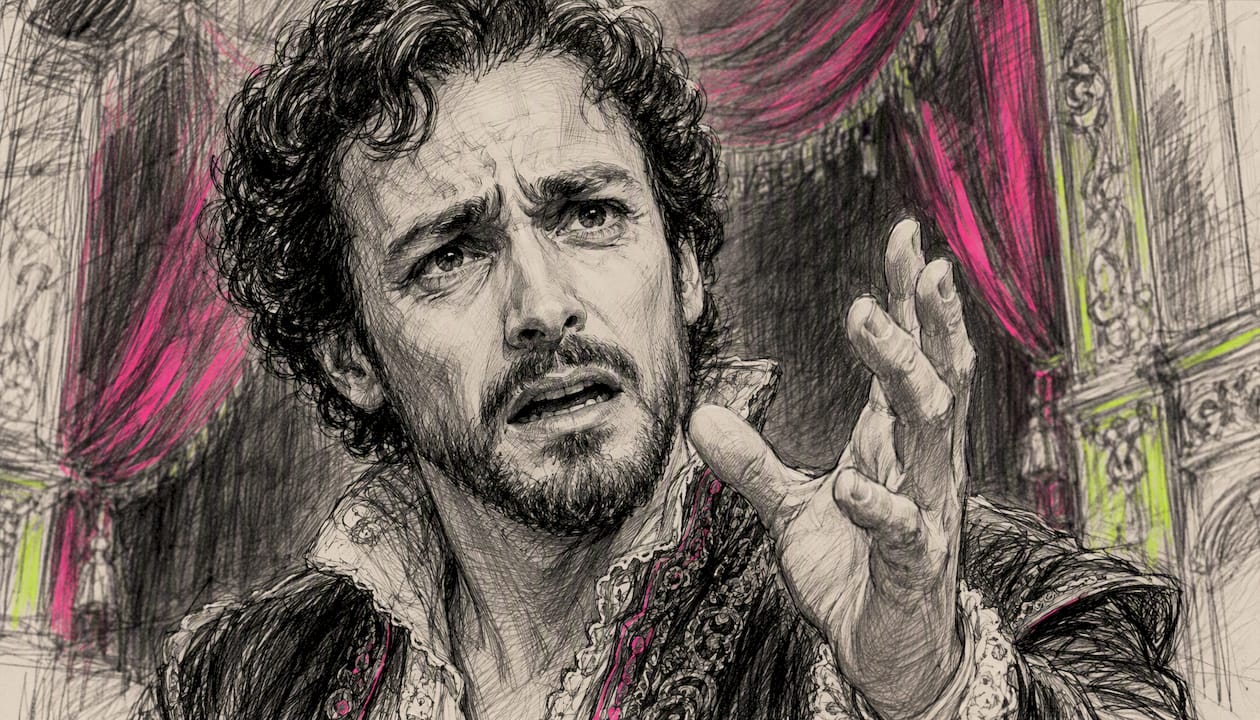
Paul Robeson brought Othello to Broadway in 1943 in a production that ran for 296 performances, a record for a Shakespeare play on Broadway at the time. His casting was politically charged: the United States was still a segregated country, and Robeson's Othello was read by audiences and critics as a statement about race and power that the text itself demanded.
The 20th century and the decline of blackface
Blackface performance, which had been a mainstream theatrical and cinematic convention since the 19th century, began its long retreat from mainstream acceptability in the mid-20th century, accelerated by the civil rights movement. Hollywood's casting practices remained heavily racially stratified well into the 1980s and 1990s, with academic analysis of SAG data documenting that a substantial majority of roles in some samples went to white actors, with minorities persistently underrepresented in lead and episodic television roles.
Recent turning points
| Year | Production | Significance |
|---|---|---|
| 1943 | Othello (Broadway, Paul Robeson) | First major Broadway production with a Black lead in the title role |
| 1833 | Othello (Covent Garden, Ira Aldridge) | First recorded Black actor in the role on the professional English stage |
| 2015 | Hamilton (Off-Broadway / Broadway) | Colour-conscious casting used as political and artistic argument |
| 2019 | Bridgerton (Netflix, production begins) | Colour-conscious historical reimagining at mainstream streaming scale |
| 2020 | The Personal History of David Copperfield | Dev Patel as Copperfield; race treated as irrelevant to the Victorian narrative |
| 2021 | Anne Boleyn (Channel 5) | Jodie Turner-Smith as Anne Boleyn; identity-conscious casting in a historical drama |
| 2021 | The Green Knight | Dev Patel as Gawain; cross-cultural casting in Arthurian myth |
Each of these productions sparked a distinct public conversation, which is precisely why they are worth examining in detail.
Case studies that shaped the debate
Hamilton (2015)
Lin-Manuel Miranda's musical about the American founding fathers cast almost entirely actors of colour in roles representing historical white figures. The rationale was explicit and political: Miranda wanted the story of America's founding to be told by the America of today. The casting was not incidental; it was the show's central argument about ownership of national history.
The production became a cultural phenomenon, and its casting approach entered the mainstream vocabulary of theatre criticism. It also generated a genuine counter-argument: some critics noted that the show's celebratory framing of figures like Alexander Hamilton risked obscuring their roles in slavery, and that casting Black and Latino actors to voice those figures created an uncomfortable tension the production did not always resolve.
Bridgerton (2020)
Netflix's Bridgerton used colour-conscious casting to build an alternative historical world in which race is not a barrier to aristocratic status. The show's creative team described the approach as deliberate world building rather than historical revisionism. Audiences responded: the series became one of Netflix's most-watched productions. Critics were divided, with some praising the joyful inclusivity and others arguing that the show's refusal to acknowledge race risked a different kind of erasure.
The Personal History of David Copperfield (2019)
Director Armando Iannucci cast Dev Patel as Dickens's semi-autobiographical hero in a production that treated race as entirely irrelevant to the Victorian narrative. The ensemble was deliberately multiracial, and Iannucci described the approach as reflecting the reality of Britain's history rather than distorting it. Critical reception was warm; the casting generated far less controversy than Anne Boleyn, perhaps because the film's comic register made the anachronism feel playful rather than provocative.
Anne Boleyn (2021)
Channel 5's three-part drama cast Jodie Turner-Smith, a Black British-American actress, as the Tudor queen. The production was explicit about its identity-conscious intent: the creative team argued that casting a Black woman in the role foregrounded Anne's status as an outsider, a woman whose difference from the court made her both powerful and vulnerable. Public reaction was sharply divided along predictable lines, with some viewers objecting to what they called historical inaccuracy and others arguing that historical drama has never been obliged to be a documentary.
Ira Aldridge and Paul Robeson: the classical precedent
These two figures matter because they demonstrate that the arguments being made today about authenticity, access, and the politics of casting are not new. Aldridge performed across Europe precisely because the British theatrical establishment would not fully accommodate him. Robeson's Broadway Othello was a political act as much as an artistic one. Both men navigated systems designed to exclude them and, in doing so, permanently expanded what was considered possible on stage.
The ethical debates every practitioner needs to understand
The arguments for and against cross-cultural casting are more nuanced than the culture-war framing that dominates social media. Here is an honest map of the terrain.
The case for
Cross-cultural casting can disrupt the assumption that certain stories belong to certain bodies. When it is done with intentionality and community involvement, it can make visible the constructed nature of identity in performance, enrich interpretation, and open professional opportunities to actors who have been systematically excluded from lead roles. Casting directors report that studio mandates and awards recognition have given them leverage to pursue wider searches, and that the results have been artistically and commercially strong.
The case against
The strongest objections are not about tradition; they are about power. When a production casts an actor from a dominant cultural group in a role representing a marginalised community, it can reproduce the very erasure it claims to challenge. The question is not whether cross-cultural casting is ever legitimate, but who benefits from the specific choice being made. Latino artists and other communities have argued that authentic representation requires community voices at every level of production, from the writers' room to the casting suite, not merely a face on screen that "looks right."
Ethical principles to apply
Intentionality is the first test: what is the casting choice for, and does it serve the story or the production's convenience? Proportionality asks whether the decision is appropriate to the scale of the cultural claim being made. Consultative practice means involving the portrayed community before decisions are finalised, not after the announcement. And the avoidance of dehumanisation and stereotyping requires that no casting choice reduces a community to a set of visual or behavioural shorthand.
On the legal dimension: law reform has limited reach here. First Amendment protections in the United States and equivalent artistic-freedom principles in other jurisdictions mean that most casting decisions cannot be legally compelled in either direction, as academic analysis of the field confirms. The ethical framework, not the legal one, is where the real work happens.
Common pitfalls to flag:
- Tokenism: casting one actor from an underrepresented background and treating that as sufficient.
- The "No Accent" problem: a phrase in casting notices that functions as coded exclusion of non-native speakers and regional voices.
- Hiring consultants after the cast is announced, when their input can no longer shape the work.
How to implement responsible cross-cultural casting
This is where the principles become practice. Whether you are a director, a casting director, or a drama tutor, the following sequence will help you make defensible, creative decisions.
A step-by-step process
- Script review at development stage. Before casting opens, identify every role where cultural identity is narratively significant. Ask whether the script's framing of those identities is accurate, respectful, and free of stereotype.
- Involve the casting director early. Casting directors who specialise in diverse talent pools should be part of the creative conversation from the first production meeting, not brought in once the director has already formed a vision.
- Widen your outreach channels. Standard breakdowns sent to standard agencies will return standard results. Use community networks, drama schools with diverse student bodies, and global talent databases that self-tape submissions have made genuinely accessible.
- Commission a cultural consultant. Budget for this from the start. A consultant who is brought in during pre-production can shape the script, the casting brief, and the rehearsal process, as detailed in this creator's complete guide to vertical drama production. One brought in after the cast announcement can only do damage limitation.
- Write casting notices carefully. Specify what you actually need: vocal qualities, physical requirements, language skills. Do not use vague exclusionary shorthand. NAVA's best-practice guidance is explicit that "No Accent" is an exclusionary term; replace it with a specific description of the vocal register the role requires.
- Structure auditions and callbacks to reduce bias. Blind first-round submissions, diverse audition panels, and structured scoring criteria all reduce the unconscious bias that narrows pools before they are formally assessed.
- Build the conversation into rehearsal. Identity-conscious casting invites actors to bring their whole selves into the room. Create space for that through structured dramaturgical conversations, not just warm-up exercises.
Casting-notice language: what to avoid and what to use instead
| Poor wording | Recommended alternative |
|---|---|
| "No Accent" | "Clear, neutral received pronunciation required for this role" |
| "Ethnically ambiguous" | Describe the character's specific cultural background as written |
| "All types welcome" (with no outreach) | Active outreach to underrepresented talent pools, named in the brief |
| "Must be a native speaker" | Specify the language register and fluency level the role requires |
Pro Tip: When working with a cultural consultant, ask them to review the casting brief before it is published, not after. A single phrase in a breakdown can signal to an entire community that the production is not genuinely open to them, and that signal travels fast through professional networks.
Red flags that a production is tokenising
- Only one actor from an underrepresented background in the ensemble.
- The consultant's name appears in the credits but their notes were not implemented.
- The cultural advisor was contacted after the cast was announced.
- The script's representation of the community has not been reviewed by anyone from that community.
- The production's marketing uses the diverse casting as a selling point while the story itself marginalises those characters.
The "only one" syndrome is a practical barrier: hiring multiple actors from the same underrepresented background dismantles tokenism and supports ensemble credibility in ways that a single casting choice never can.
What the data shows about representation and opportunity
The industry's progress on representation is real but uneven, and the numbers are worth knowing precisely because they are still uncomfortable.
Academic analysis of SAG data from the 2000s and 2010s documented that a substantial majority of roles in some samples went to white actors, with minority actors persistently underrepresented in lead roles and episodic television. That baseline matters when evaluating how much recent progress has actually shifted the structural picture.
| Metric | Finding | Source period |
|---|---|---|
| Share of roles going to white actors (sample) | Over 70% in some documented samples | 2000s–2010s SAG / academic data |
| Lead-role representation | Minorities persistently underrepresented relative to population share | 2000s–2010s |
| Industry shift driver | Studio mandates and awards recognition cited by casting directors | Post-2020 |
Casting director Francine Maisler and others have described a post-2020 shift in which studio mandates and awards recognition gave casting teams the institutional backing to pursue wider searches. The success of productions like West Side Story (2021) and CODA (2021) at awards level reinforced that argument commercially.
Technology has accelerated access. Self-tape submissions and global casting databases have made it genuinely easier to find diverse, authentic talent internationally, reducing the geographic and financial barriers that once kept underrepresented actors out of consideration for major productions.
Union and policy contexts matter here too. SAG-AFTRA and Actors' Equity have both issued guidance on inclusive casting practices, and their involvement gives productions a framework for accountability that goes beyond good intentions.
How university drama programmes are approaching this
Cross-cultural casting is increasingly a formal subject in drama education, not just a practical decision made in the rehearsal room. Research from Texas Tech University documents pedagogical approaches that treat the casting process itself as a site of learning, with actor-centred facilitation and community discussion built into the rehearsal structure.
Three pedagogical approaches from the academic literature are worth summarising:
Actor-centred facilitation. Rather than the director imposing a cultural interpretation, this approach invites actors to bring their own research and lived experience into early rehearsals. The dramaturgical conversation happens in the room, with the director as facilitator rather than authority.
Community-linked dramaturgy. Productions in university settings have successfully partnered with local community organisations representing the cultures depicted in the work. These partnerships function as both a research resource and an accountability mechanism, and they model for students what genuine consultation looks like in professional practice.
Structured ethical framing. Some programmes now include a formal ethics module as part of the pre-production process, asking students to articulate the rationale for each casting decision in writing before rehearsals begin. This creates a paper trail of intentionality and gives tutors a basis for assessment.
A teaching checklist for drama tutors:
- Assign pre-reading on the history of the role and its cultural context before the first rehearsal.
- Facilitate an open conversation about identity and casting in the first week, using structured questions rather than open debate.
- Invite a cultural consultant or community representative to address the company at least once during the process.
- Build reflection time into the schedule: ask actors to journal their experience of the casting choice and share selectively.
- Assess not just the performance but the process: how did the company navigate the ethical questions the casting raised?
For further academic reading, the Texas Tech repository entry and the HowlRound piece on identity-conscious casting are the two most practically useful starting points for student projects and tutor preparation.
A performer's perspective on what this means in practice
Cross-cultural casting is not an abstract policy debate for me. As a performer who works across film, television, theatre, and live events, the question of who gets to tell which story, and how, shapes every audition room I walk into. What strikes me most, having read the research and lived the industry, is how often the ethical conversation happens too late. Productions announce a bold casting choice, the discourse erupts, and the creative team scrambles to explain a decision that should have been thought through six months earlier.
The practitioners who get this right share one habit: they start the conversation about identity and representation at the script stage, not the casting stage. That is not just an ethical position; it is a craft position. A story that has been shaped by the community it depicts, from the first draft through to the casting brief, is almost always a better story. The identity-conscious approach that invites actors to bring their whole selves into the room produces performances that no amount of research or coaching can replicate. That is what I look for in a production worth committing to, and it is what I bring to every role I take on.
Sofiavicedomini: a performer built for complex, cross-cultural work
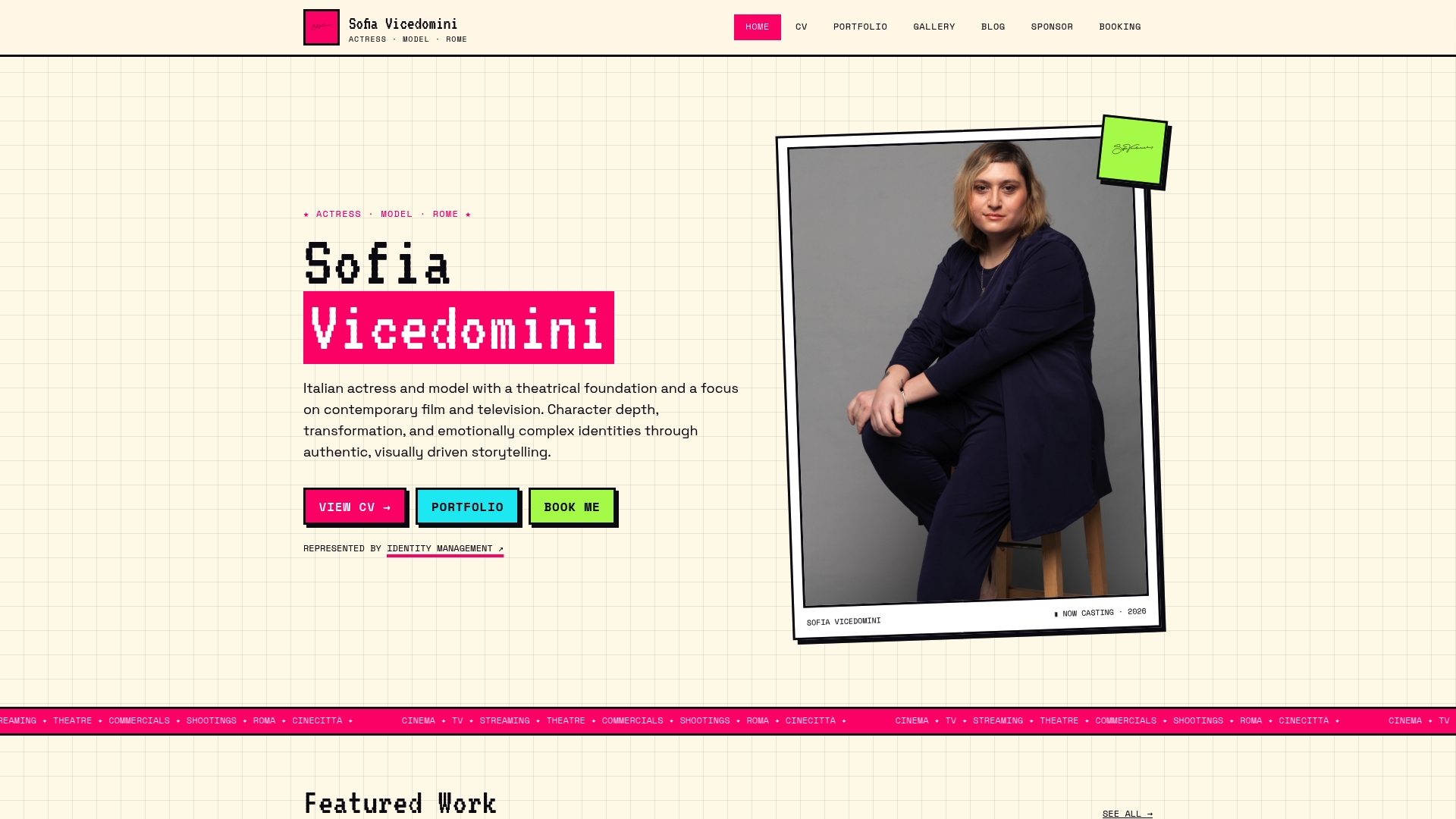
The productions that handle cross-cultural casting well share a common need: they require actors who can hold complexity, bring authenticity to unfamiliar territory, and adapt without losing the emotional core of a character. That is precisely what Sofiavicedomini offers casting directors and production teams working on film, television, theatre, and live events.
With a strong theatrical foundation and a portfolio of emotionally layered character portrayals, Sofiavicedomini brings the kind of depth that identity-conscious productions depend on. Whether the project is a contemporary film, a commercial shoot, or an interactive theatre performance, the ability to transform into a role while keeping it grounded in genuine human experience is what separates a serviceable performance from a memorable one.
If you are casting a production that demands that level of craft, view the full portfolio and book a conversation to discuss how Sofiavicedomini can serve your project.
Sources
- Identity-conscious casting | HowlRound Theatre Commons
- How 'West Side Story,' 'CODA' represent diverse strides with casting | Variety
- Best practices for authentic casting | NAVA
- Cross-cultural casting: Noteworthy for Hollywood, but not exactly new | NPR
FAQ
What is colour-blind casting?
Colour-blind casting treats an actor's race, ethnicity, or cultural background as irrelevant to the role, casting purely on talent and suitability. It differs from colour-conscious casting, which uses identity as a deliberate dramaturgical choice.
What does "inclusive casting" mean?
Inclusive casting asks who is the most authentic voice for a story, rather than simply whether a demographic line can be crossed. It encompasses race, gender identity, disability, and neurodivergence, as HowlRound's framework makes clear.
Can an actor play roles of a different gender?
Yes, and this has a long theatrical history, from Elizabethan boy players to contemporary productions that cast across gender lines. Identity-conscious casting treats gender, like race, as a dramaturgical resource rather than a fixed constraint.
Why are Black actors being cast in historically white roles?
Productions like Anne Boleyn and Bridgerton use colour-conscious or identity-conscious casting to make a deliberate creative argument, whether about ownership of history, the constructed nature of identity, or the aspirational world a production wants to build. The choice is artistic and political, not accidental.
What is the difference between cross-cultural and authentic casting?
Cross-cultural casting describes the act of casting across cultural or identity lines. Authentic casting asks whether the actor's own experience genuinely serves the role. The two approaches sometimes align and sometimes conflict, which is why intentionality and community consultation matter so much in the decision-making process.