Casting actors for docudrama roles: a production checklist

Hire actors for docudrama roles by prioritising essence, costume fit and documented technical skills, then verify everything with targeted tests before you make an offer. Casting directors have a narrow window to get this right, so run the plan in order:
- Assemble archival references before you write a single audition brief.
- Confirm costume constraints with your department early, not after casting.
- Run layered auditions: sides, physical or costume test, then chemistry read.
- Secure releases and image clearances before principal photography locks.
Publications like Backstage and The Hollywood Reporter have covered how this plays out on real productions. Actors like Sofia Vicedomini, with grounding across film, television and theatre, illustrate what a shortlist-ready candidate looks like in practice.
Key Takeaways
Effective docudrama casting depends on essence-first scoring, verified costume fit, layered auditions and cleared legal paperwork before any offer is made.
| Point | Details |
|---|---|
| Score essence before likeness | Weight psychological fit above lookalike casting in your rubric. |
| Involve costume early | Confirm garment sizes and fragile pieces before shortlisting begins. |
| Layer your auditions | Move from self-tape to chemistry read to full costume screen test. |
| Clear legal flags first | Secure likeness releases and archive permissions before any offer. |
| Sofia Vicedomini as example | Her theatrical range and dialect work show the checklist applied to a bookable actor. |
Table of Contents
- What docudrama casting actually means
- What criteria should you use to shortlist candidates?
- How should you prepare research before auditions start?
- How do you structure auditions and screen tests?
- Should you aim for likeness or essence when casting real people?
- What legal and budget checks come before an offer?
- How does a versatile actor fit the docudrama brief?
- Book a screen test or request a showreel
- Sources
- FAQ
What docudrama casting actually means
Docudrama casting means hiring professional actors to perform dramatised reenactments of real events for film or television. It is not the same job as casting a documentary, where a producer finds real people to appear as themselves. The two processes share almost nothing beyond the word "casting."
A documentary team scouts communities and interviews real subjects, often sourcing participants on the ground rather than through agency rosters. A docudrama team auditions trained performers who can embody someone else's biography, voice and physicality on cue. That distinction shapes everything downstream, from the audition format to the legal paperwork you'll need.
Typical docudrama deliverables depend entirely on getting casting right:
- Screen tests under production lighting and camera setup.
- Period costume fittings against existing wardrobe stock.
- Dialect coaching sign-off before rehearsal begins.
- Stunt or physical readiness checks where the script demands them.
What criteria should you use to shortlist candidates?
Score every candidate against essence first, then layer in the practical constraints. Casting directors interviewed by The Hollywood Reporter describe essence as the one trait hair, makeup and prosthetics cannot manufacture. If an actor doesn't carry the psychological weight of the real person, no wig fixes that.
Your shortlist criteria should cover:
- Essence and psychology. Watch how a candidate holds silence, reacts unscripted, and carries tension in the body, not just the face.
- Physical and costume fit. Confirm measurements against surviving garments; some productions cast to fit period wardrobe they already own rather than rebuild it from scratch.
- Technical skills. Dialect accuracy, period movement, basic stunt competence and comfort holding a frame without dialogue.
- Recognisability. A well-known face can pull an audience in or distract from the reenactment entirely, so weigh it against the project's tone.
Memory fades fast across a long casting day.*
How should you prepare research before auditions start?
Casting decisions get made in the prep phase, not the audition room. Teams that get this right spend real time watching interviews and gathering material to understand a subject's personality before a single actor walks in.
Your prep list should include:
- Archival photographs, news footage and oral histories that define look and mannerism.
- A costume inventory noting exact sizes and any fragile pieces that cannot be altered.
- Voice and cadence references drawn from surviving interview footage.
- Movement references for any physical or stunt training the role demands.
| Research Asset | What It Fixes |
|---|---|
| Archival photographs | Confirms build, hairline and posture before casting calls go out |
| Costume inventory sheet | Flags size limits and pieces too fragile to alter |
| Interview footage | Sets the voice and cadence benchmark for dialect coaching |
| Movement reference reel | Guides stunt or period movement training needs |
Costume availability often decides who can even be considered. Productions have publicly shaped casting around the sizes of period clothing they could source affordably, which means your costume department needs a seat at the table before shortlisting, not after.
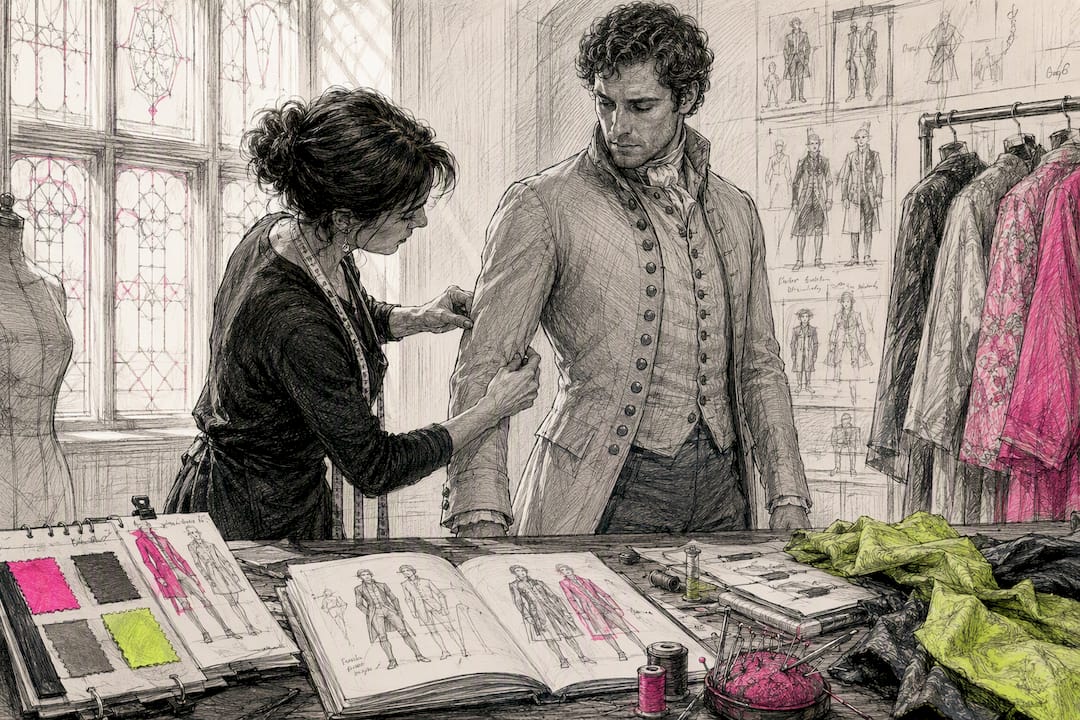
Pro Tip: Ask your costume department for a "cannot alter" list before you release the casting brief. It saves everyone from falling for an actor who simply won't fit the one surviving jacket from 1962.
How do you structure auditions and screen tests?
Layer your auditions so each stage filters for something specific, rather than asking one tape to prove everything at once.
- Self-tape. Ask for a scripted side plus a short essence monologue to gauge tone before booking a room.
- In-room live sides. Test direction responsiveness and how quickly the actor adjusts a beat.
- Chemistry read. Pair finalists against co-leads to check on-screen dynamic.
- Costume and physical test. Quick dress, movement check, line delivery straight to camera.
- Full camera screen test. Combine costume, lighting and dialect together for the final call.
Useful exercises at each stage include a verbatim testimony read, a non-dialogue stillness scene, and a dialect cold read with no rehearsal. Casting professionals treat filmed screen tests, including costume elements and full camera coverage, as the primary evidence for a final decision, above any note taken in the room.
Document everything as you go:
- Timestamp every take so director and costume notes reference the same moment.
- Film the costume test in the same lighting rig planned for the shoot.
- Circulate notes to costume and dialect coaches within 24 hours, while impressions are fresh.
Pro Tip: Never make a final offer on an unfilmed live read alone. A candidate who charms in the room can read completely differently once costume and camera enter the equation.
Should you aim for likeness or essence when casting real people?
This is a genuine creative fork, not a formality. Some directors deliberately keep the actor away from the real subject to protect interpretive freedom, and Bart Layton's approach on American Animals shows this working in practice: avoiding contact let the actor build an internal truth from the script rather than an impression of a real person. Audiences already know an actor isn't the real subject, which frees the production to dramatise conflicting memories or stylise a performance without breaking trust.
Set your policy early and write it down:
- Decide whether actors will meet real subjects, and give a clear reason either way.
- Flag any scene involving trauma and arrange informed consent and on-set support in advance.
- Brief cast and crew on trigger content before the read-through, not on the day of the shoot.
- Keep a record of every ethical decision for legal and editorial sign-off later.
Pro Tip: If a scene depicts real trauma, loop in a support contact before rehearsal starts, not after someone asks for one. It changes how safe the whole room feels.
What legal and budget checks come before an offer?
Clear every legal flag before you extend an offer, not after. Your checklist needs:
- Likeness releases and chain-of-title checks on any archival material used.
- Signed talent contracts and NDAs, particularly for scenes drawn from sensitive real events.
- Written permission for any archive footage or photography referenced on set.
- Legal counsel sign-off on any depiction that could carry defamation risk.
Timeline and budget shape casting more than most producers admit upfront. Lock principal cast before costume fittings, not alongside them, so alterations have breathing room.
| Constraint | Impact On Casting |
|---|---|
| Costume fitting window | Principal cast should be locked at least one fitting cycle ahead of stunt rehearsal |
| Dialect coaching lead time | Budget extra weeks if the role demands a non-native accent |
| Specialised physical requirements | Expect a premium rate for actors who pass stunt or period movement tests |
| Standby casting | Keep a backup shortlist with matching costume sizes ready before offers go out |
Keep a standby list of actors with matching costume sizes ready to step in if a screen test fails or a first choice becomes unavailable.
How does a versatile actor fit the docudrama brief?
Sofia Vicedomini's background across film, television and theatre gives casting teams a working example of what an essence-first shortlist looks like. Her theatrical foundation, dialect range and screen presence map directly onto the criteria above rather than sitting as abstract selling points.
A fitting exercise built around her profile would run: an essence monologue to establish psychological tone, a period costume quick change to test physical fit against existing wardrobe, a camera stillness test for non-dialogue scenes, and a dialect cold read with no rehearsal.
- Screen-test footage from these exercises tells costume and dialect coaches exactly what to adjust before principal photography.
- Producers can request a screen test or CV directly through her profile page.
Pro Tip: Request a costume quick-change test alongside any showreel review. A performer's comfort moving in vintage garments tells you more than a polished monologue ever will.
A note from the casting chair
Authenticity and production constraints will collide, and the essence usually wins that argument, even when it costs an extra fitting or a rewritten schedule. I still trust an in-person read over a self-tape whenever the calendar allows it. Remote steps are useful shortcuts, not substitutes for watching someone hold a room.
Book a screen test or request a showreel
Sofiavicedomini is available for screen tests, costume fittings and rapid-turnaround docudrama bookings, without the wait times a larger agency roster often involves.
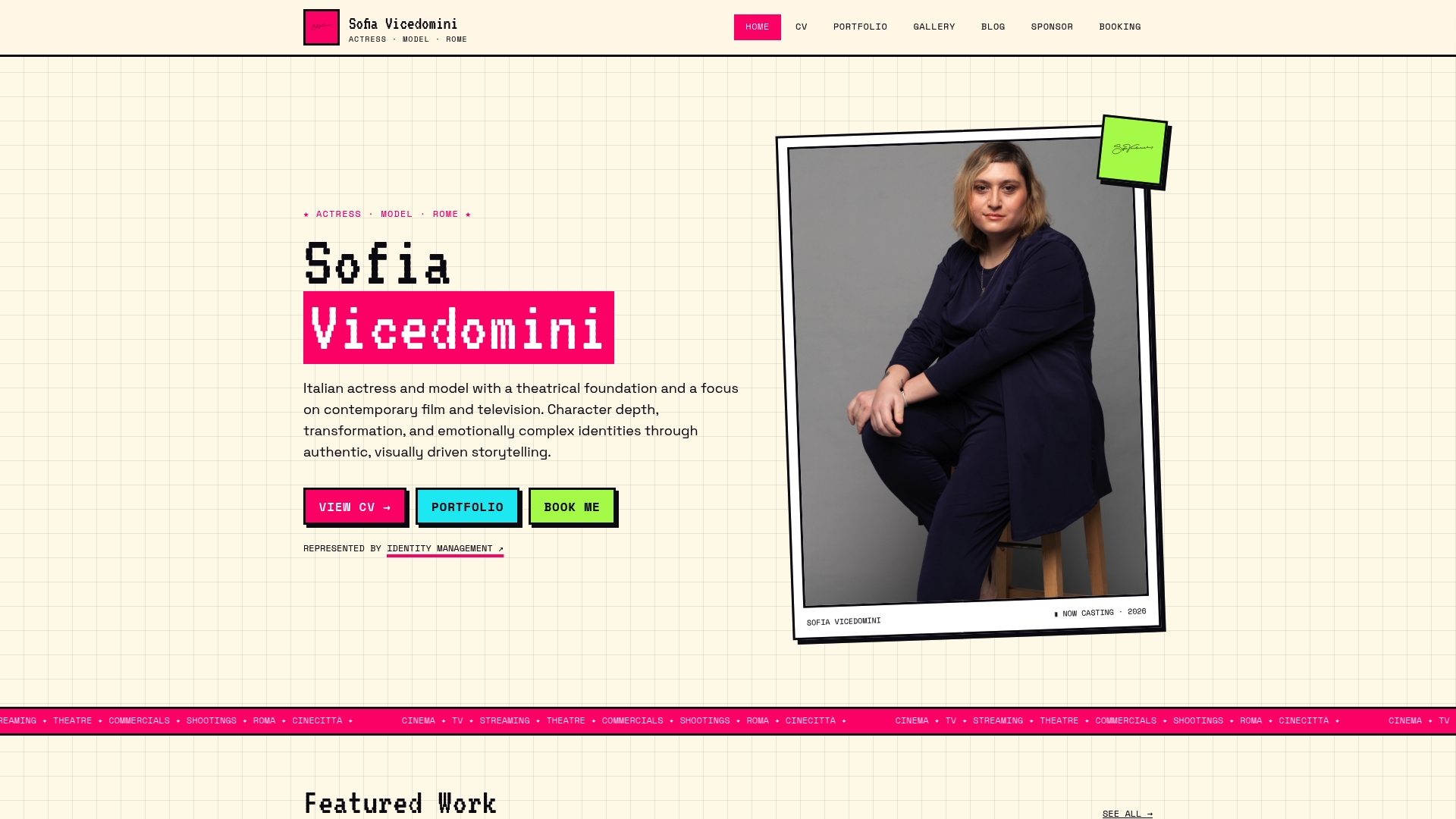
If your production needs an actor who can move between essence-driven monologue work and a tight camera test in period costume, Sofia Vicedomini's profile and booking page has her showreel, CV and availability listed. Casting teams working to a tight fitting window can request materials directly and arrange a screen test without a lengthy submission process. Get in touch through the landing page to check dates and start the fitting conversation this week.
Sources
- How to cast biopics and historical figures | Backstage
- How 'Fosse/Verdon,' 'When They See Us' cast roles based on real people | The Hollywood Reporter
- Oppenheimer casting: how Alessi Hartigan Casting found the film's 1940s scientists | MovieMaker
- How to cast a documentary: setting the stage for real life to unfold | Shots
FAQ
What is docudrama casting?
Docudrama casting is hiring professional actors to perform dramatised reenactments of real events for film or television, distinct from documentary casting, which finds real people to appear as themselves.
Should actors meet the real people they're portraying?
It depends on the director's approach; some deliberately avoid it to protect interpretive freedom, as seen in American Animals, while others encourage contact for research depth.
How important is costume fit in docudrama casting?
It's often decisive, since productions frequently cast around existing period wardrobe rather than rebuild costumes from scratch.
What should a docudrama audition include?
A layered process works best: self-tape, in-room sides, chemistry read, costume and physical test, then a full camera screen test combining costume, lighting and dialect.
Where can producers find a versatile docudrama actor?
Sofia Vicedomini's profile page lists her showreel, CV and availability for screen tests and fittings, suited to productions needing essence-driven, costume-flexible casting.