
Emotional recall vs imagination: what actors should use, and when

Emotional recall draws on your own past experiences to summon a feeling; imagination (or sense memory) builds that feeling from invented sensory detail rooted in the script's given circumstances. For regular rehearsal, auditions and screen work, favour imagination and sense memory; save emotional recall for rare, carefully supervised moments, and only once you have training and support in place. Three things change that verdict: how intense the scene is, how ready you are as an actor (training, mental state), and whether you need the same result take after take.
- Low to medium intensity, tight schedule, or camera work? Use sense memory and the "Magic If."
- High intensity, one-off stage moment, experienced actor with a trainer present? Emotional recall can work, briefly and with an exit plan.
- Auditions, cold reads, or self-tapes? Always imagination. You need reliability, not vulnerability roulette.
Key Takeaways
Imagination and sense memory produce more reliable, repeatable emotional truth than emotional recall, which should be reserved for rare, supervised, high-stakes moments.
| Point | Details |
|---|---|
| Default to imagination | Use Magic If and sense memory for rehearsal, auditions, and screen work needing repeatable results. |
| Reserve emotional recall | Save affective memory for rare, high-intensity stage moments with a trainer present. |
| Watch for red flags | Racing heart, intrusive memories, or low mood lasting days signal you should stop and seek support. |
| De-role every time | Name, date, three real objects, then a grounding task, immediately after intense work. |
| Scale intensity gradually | Build from low intensity in early rehearsal to a sustainable level by tech week. |
Table of Contents
- Emotional recall vs imagination: defining affective memory first
- What imagination and sense memory actually build
- Stanislavski, Strasberg, Adler: the debate over risk
- Comparing the two techniques side by side
- Safety, red flags, and de-roling after intense work
- Exercises actors can practise safely, alone or in class
- Choosing the right technique scene by scene
- Why imagination can feel just as real as memory
- Notable performances built on each approach
- Sources
- FAQ
Emotional recall vs imagination: defining affective memory first
Emotional recall, also called affective memory, means reaching into your own episodic memory (a real event you lived through) to reproduce the emotion it once caused. Stanislavski called it a conscious "road to the gates of the unconscious," part of the psychotechnique he built to help actors access genuine feeling on demand rather than performing an emotion's surface signs.
Mentally, it works through episodic retrieval: you reconstruct a specific autobiographical scene, complete with sounds, smells, and bodily sensations, and let the nervous system respond as if the event were happening again. The body often reacts before the conscious mind catches up, which is exactly why it can feel so powerful and so unpredictable in the same breath.
A typical scaffolded exercise looks like this:
- Choose a memory with emotional weight similar to (not identical to) the scene's demand.
- Recall three sensory details first (a smell, a sound, a texture) before touching the emotional core.
- Let the feeling arrive; do not chase it.
- Bring the feeling into the scene's action rather than sitting in it.
The catch: memory is not a recording. Every retelling reshapes the story a little, a process researchers call narrativisation, so the emotional charge can drift, fade, or spike unpredictably between rehearsals. That is the core reliability problem with emotional recall, and it is why most contemporary training treats it as an occasional tool, not a daily habit.
What imagination and sense memory actually build
Imagination, in Stanislavski's own language, is the "Magic If": asking what you would do if the given circumstances of the play were real, then constructing a believable inner world from script detail rather than personal history. Sense memory supports this by anchoring the imagined world in specific, invented sensory information, the texture of a coat, the temperature of a room, until the body responds as though the imagined stimulus were real.

Both processes, remembering and imagining, are active constructions rather than passive playback, which is why an invented scene can feel every bit as real as a lived one once the sensory detail is specific enough.
A safe sense-memory drill:
- Sit quietly and choose one invented object relevant to the scene (a letter, a cold glass, a locked door).
- Build it sense by sense: weight, temperature, sound, smell, in that order.
- Introduce the imagined circumstance connected to the object.
- Let the physical response guide the emotional one, not the reverse.
Because you are constructing the scene from repeatable script details rather than fragile personal memory, imagination tends to produce more consistent results across multiple takes or performances, which is exactly what a shoot schedule or an eight-show week demands.
Stanislavski, Strasberg, Adler: the debate over risk
Stanislavski never intended emotion memory to stand alone. His system offered several "paths" to feeling, imagination, physical action, and affective memory, and he leaned increasingly on the method of physical actions later in his career precisely because it gave actors a safer, more controllable route to truthful emotion.
Lee Strasberg's American interpretation pushed emotion memory further towards the centre of training, while Stella Adler broke from him publicly, arguing that digging repeatedly into personal trauma was neither necessary nor healthy, and pushing actors towards imagination and given circumstances instead. Sanford Meisner took a third route, built almost entirely on reacting to a scene partner in the moment.
Critical accounts of Method practice describe real concern when emotion memory is applied carelessly, with warnings that misuse can tip into psychologically damaging territory rather than useful craft.
The debate still shapes conservatoire training today: most contemporary programmes teach imagination and physical action as the default, and treat emotional recall as an advanced, closely supervised tool.
Comparing the two techniques side by side
| Dimension | Emotional recall | Imagination / sense memory |
|---|---|---|
| Core definition | Reproducing emotion from a real personal memory | Constructing believable emotion from invented sensory and circumstantial detail |
| Mental source | Episodic memory (autobiographical) | Constructed imagery, semantic and commonsense knowledge |
| Typical exercises | Scaffolded memory recall, sensory anchoring to a real event | Magic If questioning, sense-memory drills, object work |
| Reliability | Variable; drifts with retelling and mood | Higher; script details stay constant, so the trigger stays constant |
| Risks | Intrusive memory, mood spillover, retraumatisation | Low, but can misfire if imagined stimulus becomes too personal |
| Best use-cases | Rare, high-stakes stage moments with support in place | Rehearsal, auditions, screen work, repeated takes, cold reads |
The pattern holds because imagined narratives run more linearly and draw more on general, commonsense knowledge, while recalled narratives stay dense with concrete, sometimes unpredictable, event detail. That structural difference is the practical reason imagination reproduces so much more consistently under stage lights or a fourth camera take.
- Sense memory gives you a lever you can pull the same way every night.
- Emotional recall gives you depth, but the depth is not always the same depth twice.
- Combining both, imagination for the scaffolding and a light personal association for texture, tends to outperform either alone.
A workable rehearsal workflow: build the scene first through Magic If questioning and physical action, layer in sense-memory detail once blocking is set, and only introduce a personal association, briefly, if the director specifically needs more heat and you have a trainer present to help you close it down afterwards.
Safety, red flags, and de-roling after intense work
Watch for these signs during or after affective work: racing heart that does not settle once the scene ends, intrusive memories appearing outside rehearsal, sleep disruption, or a mood that stays low for days rather than hours. Any of these warrants a pause, not persistence.
A simple de-roling routine, used immediately after an intense take or rehearsal:
- Physically shake out the body; change posture, walk, or stretch.
- Say your own name and today's date aloud.
- Name three things in the room that belong to you, not the character.
- Do a grounding physical task, drink water, retie a shoelace, before speaking to anyone.
Stop an exercise entirely and speak to your trainer, director, or a mental-health professional if the emotional charge outlasts the rehearsal by more than a day, or if a memory keeps intruding uninvited. Critical accounts of Method practice specifically warn that misapplied emotion memory work has produced real psychological harm, which is why caution here is not optional caution, it is the professional standard.
Pro Tip: *Build intensity in stages across a rehearsal week rather than diving straight to full charge on day one.
Exercises actors can practise safely, alone or in class
Warm up body and breath before any affective work: loosen the jaw and shoulders, take five slow breaths, and check in honestly with how you feel before you start.
- Object sense-memory drill. Choose an invented object, build it through weight, temperature and sound, then introduce the emotional circumstance attached to it.
- Environmental sense memory. Construct an imagined room or weather condition in full sensory detail before adding a character's problem to it.
- Controlled association (not full recall). Instead of reliving a whole memory, borrow a single sensory fragment, a scent, a piece of music, that carries emotional colour without dragging you through the entire event.
Scale intensity deliberately: keep early rehearsals at low intensity to lock in blocking and text, raise it in mid-rehearsal once the scene partner relationship is solid, and settle on a repeatable, sustainable level by tech week so it survives eight performances or multiple takes without wearing you down.
Pro Tip: Pair a specific physical action, pouring water, folding fabric, tightening a fist, with the imagined stimulus. The body often finds the emotion faster through a task than through thinking about feelings directly.
Choosing the right technique scene by scene
- Low-intensity scene, any medium: imagination and Magic If alone; no need for personal material.
- Medium-intensity scene, stage or screen: sense memory plus physical action, built gradually across rehearsal.
- High-intensity scene, live theatre, experienced actor: a light, supervised emotional recall touch, layered onto an imagination base, never standing alone.
- Auditions, cold reads, self-tapes: imagination only. You need a result you can repeat in one take, cold.
Deeper personal work belongs in the middle rehearsal weeks, once trust with the director is established, never in tech week when focus needs to sit on technical precision, and never the first time you meet a scene partner.
Why imagination can feel just as real as memory
Both remembering and imagining are constructive acts, your brain builds a scene rather than replaying a file, which is why a well-built imagined circumstance can generate a genuinely felt response rather than a performed approximation of one.
The HIPPOCORPUS research analysed thousands of short stories and found imagined narratives flow more linearly and lean on general, commonsense knowledge, while recalled narratives stay denser with concrete, specific events. That is a structural reason, not just an intuition, why imagination reproduces so reliably from rehearsal to performance.
Philosophical work on the topic argues that both recalled and imagined emotions rely on the same affective bodily imagery, and that "as if" emotions built from imagination are phenomenologically real, not a lesser substitute for the real thing.
For continuity across a shoot schedule or a run of performances, that linearity is the whole advantage: an imagined emotional line stays put where you built it, scene to scene.
Notable performances built on each approach
Marlon Brando's raw, memory-inflected work in A Streetcar Named Desire is often cited as Method acting at its most emotionally exposed, an approach closer to affective memory's edge, requiring exactly the kind of trainer support and de-roling discipline described above. Daniel Day-Lewis has spoken about building character reality through immersive, imagined circumstance rather than personal memory retrieval, constructing the world so fully that the emotion arrives as a natural consequence of belief in that world.
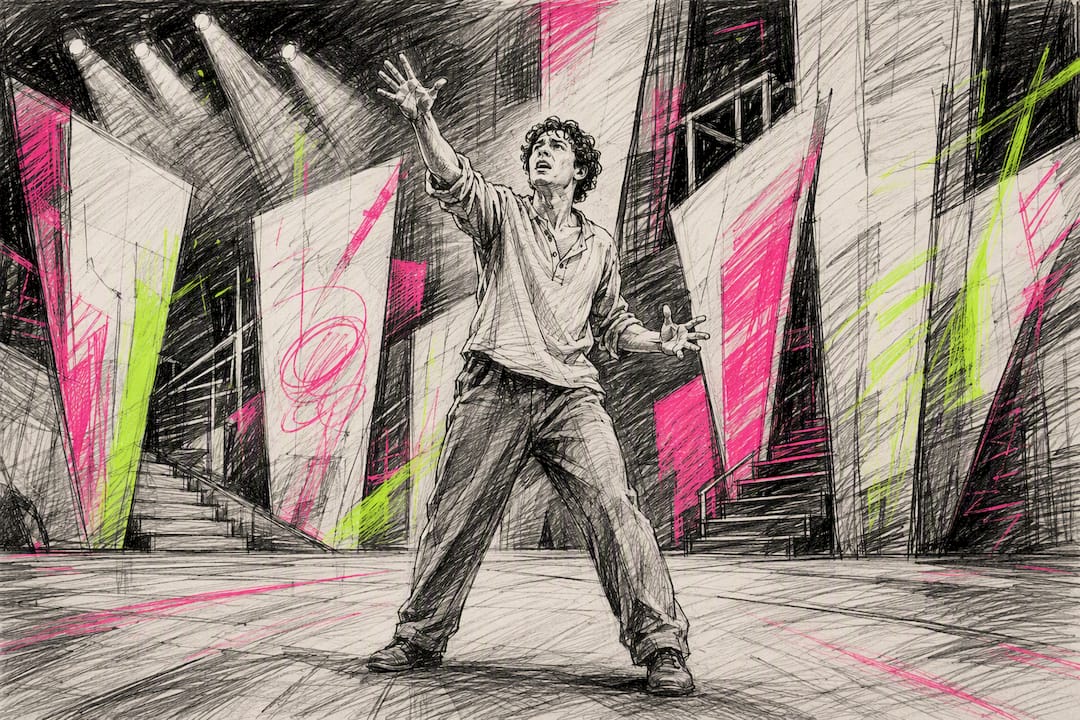
In Italian theatre and screen work, the tradition leans heavily on imagination and physical action rather than confessional memory work, partly a legacy of a training culture that prizes technical control and vocal precision alongside emotional truth. A monologue built around a grandmother's kitchen, rendered through specific invented sensory detail, the smell of ragù, the sound of a particular dialect, the weight of a chipped cup, will usually land with more consistency across a run than one relying on an actor's own grief revisited nightly.
The lesson across both traditions is consistent: the strongest, most repeatable performances tend to come from actors who treat imagination as the primary engine and personal material as an occasional, carefully handled accent, not the whole score.
A working perspective on combining the two
In my own rehearsal process, the Magic If, sense memory, and physical action work together, imagined circumstance gives me the shape, a physical task gives me the way in, and only rarely does a personal association add texture on top. Between takes, I have a short de-roling habit: name, date, three real objects, before I speak to anyone on set. If you want to see how that shows up on screen or stage, my work is collected at Sofia Vicedomini's portfolio.
Sources
- Affective memory - Wikipedia
- Remembering is an imaginative project
- HIPPOCORPUS study — imagined vs recalled stories (ACL paper)
- Affective memory, imagined emotion, and bodily imagery (Cain Todd)
- Scholarly analysis of affective memory and debate over risks (2019 paper)
FAQ
What is emotional recall in acting?
Emotional recall, or affective memory, is a technique where an actor draws on a real personal memory to reproduce a similar emotional state on stage or screen.
Are memories real records, or reconstructions?
Memories are reconstructions rather than exact recordings; each retelling reshapes the detail slightly, which is why emotional recall can feel different in intensity from one rehearsal to the next.
How do I identify what I'm actually feeling before a scene?
Pause and name the sensation in the body first, tight chest, shallow breath, before labelling the emotion; this grounds the work in something concrete rather than a vague mood.
Is imagination itself an emotion?
No, imagination is a mental process of constructing a scene or circumstance; the emotion that follows is a genuine, phenomenologically real response to that constructed scene, not the construction itself.
Which technique should beginners practise first?
Beginners should start with imagination and sense memory, since they are safer, more controllable, and build the habit of working from script detail rather than personal vulnerability.