Noir film casting: the practical UK guide

Hire actors who can hold contained emotion, moral ambiguity, and clear subtext. For noir film casting, that single principle outranks every other criterion. Prioritise performers with a professional Spotlight listing, a naturalistic screen showreel, and Equity membership. Before you go further, run every candidate through this checklist:
- Voice and tempo: measured delivery, no rushing, weight behind pauses
- Stillness: can they fill a silent frame without fidgeting or overplaying?
- Subtext: does the performance carry what the character isn't saying?
- Wardrobe restraint: clean, period-appropriate choices; no costume theatre
- Reel evidence: at least one screen credit showing contained, naturalistic work
- Self-tape quality: clean audio, neutral backdrop, stable framing
- Turnaround compliance: able to meet Equity self-tape deadlines
Pro Tip: Look for the 'kernel' of potential in a tape rather than a flawless performance. Callbacks exist to refine choices, not confirm them.
Table of Contents
- What do casting directors actually look for in noir auditions?
- How should actors prepare self-tapes for noir roles?
- How do casting directors and directors collaborate on noir?
- Working with actors: ethics, feedback, and inclusion
- Audition exercises that surface noir qualities
- What does a UK noir casting timeline look like?
- How did noir film casting evolve historically?
- How does casting differ between classic and neo-noir?
- How does casting shape noir's visual style?
- Key takeaways
- Casting noir from the inside: what I've learnt as a performer
- Sofia Vicedomini: book an actor built for noir
- Useful sources
- FAQ
What do casting directors actually look for in noir auditions?
Noir demands a very specific emotional register. The traits below are non-negotiable.

Contained emotion sits at the top. A performer who cries on cue or shouts for emphasis will flatten every scene. You want micro-expressions, a tightening jaw, a held breath. Casting director Rachel Tenner describes looking for the instinctual match first; technique follows.
Moral ambiguity is the genre's engine. Every archetype carries it differently:
- Femme fatale: magnetic surface, concealed agenda; the tape must show both simultaneously
- Hard-boiled lead: world-weariness without self-pity; economy of movement is the tell
- Corrupt authority: charm that curdles; watch for the moment the mask slips
- Moral foil: the conscience of the piece; needs warmth that survives the darkness around it
Vocal and accent considerations matter on UK productions. Crime-drama casting notices regularly specify a London or Southern British accent, and accent choice alters character perception significantly. A clipped RP delivery reads authority and concealment; a looser South London accent reads street-level moral complexity. Decide early and brief actors accordingly.
Pro Tip: Prioritise naturalistic showreel evidence over theatrical range when casting for screen noir. Stage projection and screen stillness are different skills.
How should actors prepare self-tapes for noir roles?
Equity's guidance sets clear turnaround expectations: four days for up to six pages, three days for three pages or fewer. Friday requests are normally due the following Tuesday.
| Self-tape element | Best practice |
|---|---|
| Shot composition | Medium close-up, camera at eye level |
| Backdrop | Neutral, uncluttered, no distracting colour |
| Lighting | Soft, even, no harsh shadows or blown highlights |
| Audio | Clean, no echo; use a lapel or directional mic if possible |
| Wardrobe | Simple, character-appropriate; avoid logos and busy patterns |
| File format | MP4 via Spotlight Tape Requests or as specified in the brief |
| Deadline | Confirm receipt; decline politely if the window is impossible |
For the performance itself, stillness is the technique. Use pauses rather than volume changes. Let listening beats carry the scene. Small physical shifts, a glance held a beat too long, a hand that almost moves, read far louder on a close-up than any overt emotional gesture.
If the brief is unclear, ask one precise question before recording. Casting director Catherine Willis advises that casting teams prefer a short clarifying question to a guess that misses the tone entirely.
Pro Tip: Choose sides that foreground listening and micro-choices rather than monologue. A two-hander scene with a strong reader reveals far more noir instinct than a speech.
How do casting directors and directors collaborate on noir?
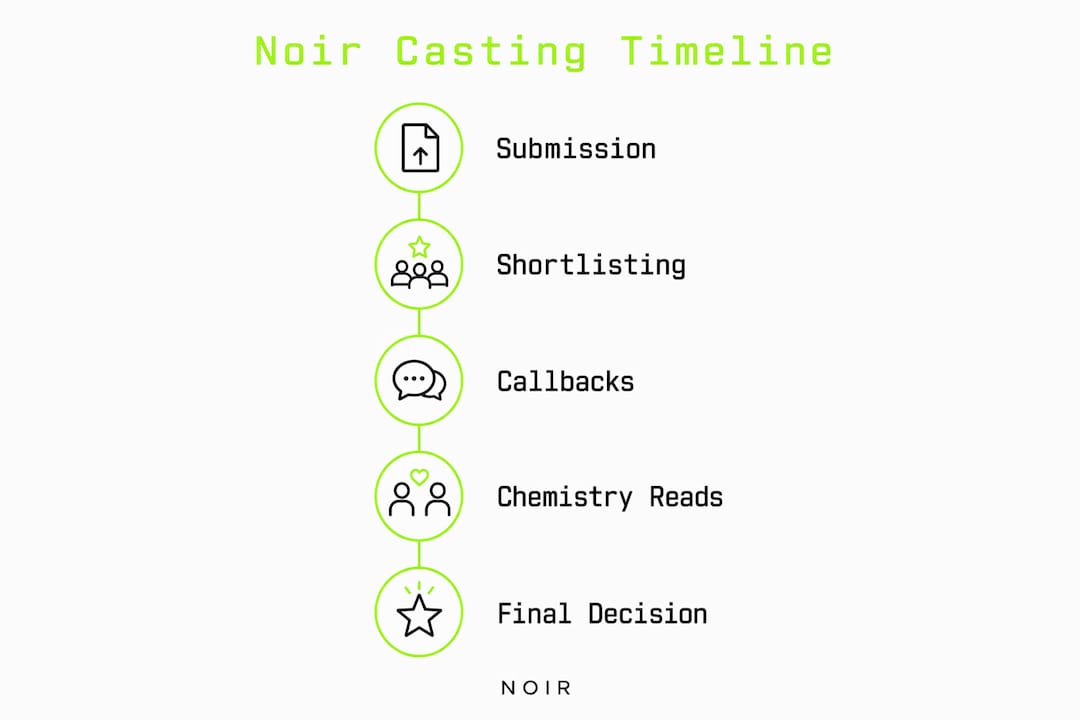
The process moves in stages: shortlisting from tapes, invited callbacks (in-person or self-tape), chemistry reads, and final camera tests. Each stage narrows on a different quality.
Director John Irvin's approach to Tinker Tailor Soldier Spy is instructive. Tony Virgo, who worked on the production, recalled:
That directorial instinct begins in the casting room. Directors who work in noir are listening for restraint, for how an actor fills silence, and for how they respond to micro-direction mid-scene.
Casting director Kahleen Crawford uses open briefs and shared references to find actors who are a "total departure from the page but perfect for the director's vision." Pack your brief with visual and tonal references, not just character descriptions. That approach also widens the search and surfaces unexpected, authentic fits.
Pro Tip: At chemistry reads, watch how actors listen to each other, not just how they deliver lines. Noir lives in the space between characters.
Working with actors: ethics, feedback, and inclusion
Professional conduct in casting is not optional; it shapes the performances you get.
- Give timely, specific feedback when a tape shows potential but misses the brief
- Confirm callback schedules promptly and communicate any changes immediately
- Send accessible formats for deaf and disabled performers; ask about access needs in advance
- Be transparent about payment, expenses, and travel requirements before requesting a self-tape
Casting director Kharmel Cochrane puts it plainly: vocalising your process creates an environment where actors can show their unique ability rather than compensate for opaque instructions.
On diversity: noir has historically been narrow in its casting. Using open briefs and avoiding typecasting by archetype alone brings in performers with authentic lived experience that deepens the genre. Kahleen Crawford's method of open calls and reference sharing consistently surfaces actors who reframe a role in ways a closed brief never would.
Pro Tip: Never request elaborate props or period costumes for a self-tape. It disadvantages performers unfairly and tells you nothing useful about the performance.
Audition exercises that surface noir qualities
These exercises work in callbacks and can be suggested to actors preparing self-tapes.
- Silence switch: run the scene once normally, then repeat it with all emotional reactions removed. What survives is the noir instinct.
- Subtext re-read: ask the actor to play the scene's subtext as the text. The contrast reveals how much they were already holding back.
- Eye-line variation: shift the reader's position mid-scene. Watch how the actor adjusts without breaking concentration.
- Controlled reaction: give the actor a piece of information mid-scene and ask for the smallest possible physical response.
- Gradual escalation: start at 20% emotional intensity and add 10% per beat. Noir lives in the 30–50% range; actors who jump to 80% are miscast.
For scene selection, favour intimate domestic confrontations, terse interrogations, and slow-burn confessions. Each reveals a different noir quality: the domestic scene tests moral ambiguity; the interrogation tests stillness under pressure; the confession tests subtext and economy.
What does a UK noir casting timeline look like?
| Stage | Typical window |
|---|---|
| Breakdown posted (Spotlight/Equity) | Week 1 |
| Self-tape submission window | 3–4 days per Equity guidance |
| Shortlisting and first callbacks | Week 2–3 |
| Chemistry reads | Week 3–4 |
| Final offers and contracts | Week 4–5 |
Checklist for production teams:
- Post breakdowns via Spotlight with full character and accent briefs
- State Equity rates or negotiated fees clearly in the breakdown
- Confirm accessibility arrangements before callbacks
- Document chemistry read impressions immediately after each session
- Avoid Friday-to-Monday turnarounds; they breach Equity best practice
Pro Tip: Build at least one buffer day between your self-tape deadline and your shortlisting meeting. Rushed decisions on noir casting are almost always wrong.
How did noir film casting evolve historically?
Classic Hollywood noir of the 1940s and 1950s drew heavily from émigré European directors, particularly those fleeing pre-war Germany and Austria, who brought Expressionist visual grammar with them. Casting reflected that: performers like Barbara Stanwyck and Fred MacMurray in Double Indemnity were chosen for their ability to project surface normality over moral corruption, a quality the studio system had trained into them through years of genre work.
The femme fatale archetype was partly a product of the Production Code's constraints. Desire had to be implied, not stated, which placed enormous pressure on the actor's physical economy. What read as "dangerous" was almost always stillness combined with precise eye contact.
British noir developed its own strand through the 1940s and 1950s, with productions like Brighton Rock and The Third Man casting actors whose theatrical training gave them the vocal precision the genre required. That theatrical foundation remains relevant today.
How does casting differ between classic and neo-noir?
Classic noir cast for archetype first. The femme fatale had to look the part before she could play it; studios operated on visual shorthand that audiences recognised immediately.
Neo-noir inverts this. The most effective contemporary noir casting, from Chinatown to Spider-Noir, deliberately subverts the archetype. When Spider-Noir creator Oren Uziel spent over 1,300 auditions finding Karen Rodriguez for Janet Ruiz, he was searching for emotional depth beyond screwball charm. Li Jun Li's Felicia Hardy in the same production was cast explicitly against type: "She is innately a good person. She's flawed and very lonely, and she just wants to save the people that she loves."
For casting agents working in neo-noir, the practical implication is clear: open your brief beyond the archetype description and look for the emotional truth the character needs, not the visual shorthand.
How does casting shape noir's visual style?
Casting is a visual decision as much as a performance one. An actor who can sustain quiet intensity reduces the director's need for heavy coverage; the camera can linger because the face is doing the work. Director John Irvin's approach on Tinker Tailor demonstrated this precisely: the stillness on screen began with casting performers who could hold a frame without filling it with unnecessary movement.
The right actor for a noir role effectively co-authors the film's visual tempo. Faces that carry subtext allow longer takes, wider shots, and the kind of negative space that defines the genre's mood. Cast for contained emotion and you spend less time in the edit trying to recover a scene.
Key takeaways
Effective noir film casting begins with one criterion: hire performers who can hold contained emotion and moral ambiguity without telegraphing either.
| Point | Details |
|---|---|
| Contained emotion first | Prioritise micro-expressions and stillness over range or volume. |
| Spotlight and showreel | Require a professional Spotlight listing and naturalistic screen credits. |
| Equity self-tape timings | Allow four days for up to six pages; three days for three pages or fewer. |
| Use specific exercises | Silence switch and gradual escalation reveal noir instinct quickly in callbacks. |
| Sofiavicedomini | Sofia Vicedomini brings emotionally complex, psychologically layered portrayals suited to noir roles across film, television, and theatre. |
Casting noir from the inside: what I've learnt as a performer
The thing that strikes me most about noir, having worked across film, television, and theatre, is how much the genre rewards preparation that nobody sees. The stillness casting directors are searching for is not passive; it is the result of knowing exactly what your character is concealing and choosing, moment by moment, not to show it. That internal work is what separates a tape that gets a callback from one that reads as technically competent but emotionally hollow.
When I prepare for emotionally complex roles, I build the character's moral architecture first. What does she want? What is she willing to do to get it? What does she refuse to admit, even to herself? Those questions generate the subtext that noir requires. A casting director watching a tape cannot see the preparation, but they feel its absence immediately.
Collaborating with casting directors during callbacks has taught me that the best ones are genuinely curious. They are not looking for a finished performance; they are looking for the instinct they can work with. That is why Sofia Vicedomini's approach to auditions prioritises responsiveness over polish: arrive with the character fully inhabited, then stay open to where the director wants to take it.
Sofia Vicedomini: book an actor built for noir
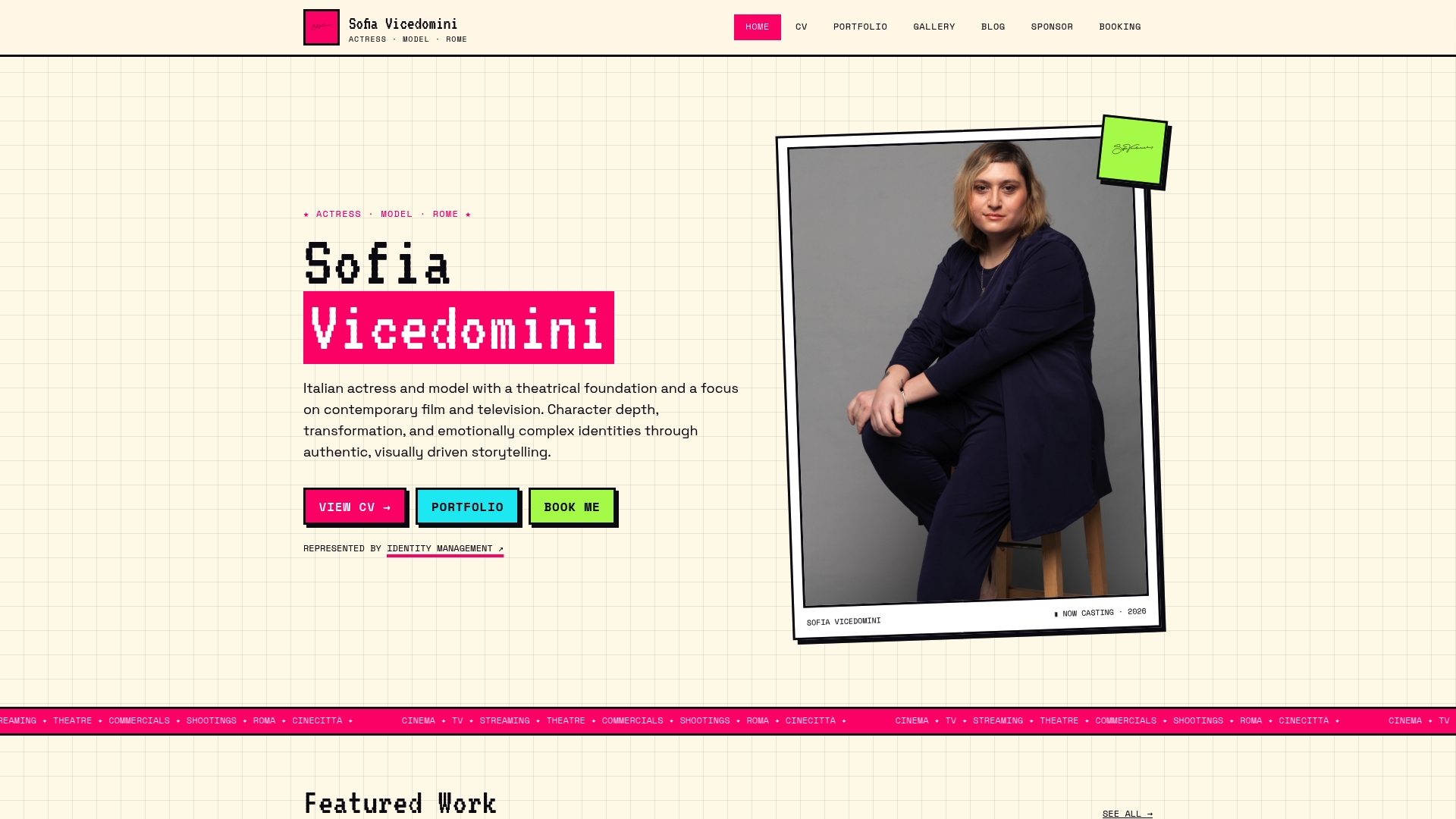
Casting directors searching for an actor who can carry psychological depth, moral complexity, and the precise emotional restraint noir demands will find that in Sofiavicedomini. Sofia brings a strong theatrical foundation to screen work, with experience across emotionally layered character portrayals in film, television, and interactive live performance. Her language versatility and stage-to-screen range make her a genuine fit for both period and contemporary noir productions.
Availability, showreel access, and audition arrangements are all handled directly. To discuss a role or request a self-tape, visit Sofia's portfolio and get in touch.
Useful sources
- Equity/Spotlight self-tape best practice: turnaround timings, technical standards, and professional conduct guidance. Central to the self-tape and logistics sections.
- Spotlight Tape Requests FAQ: platform mechanics for submitting and tracking self-tapes in UK casting workflows.
- Rachel Tenner on Spider-Noir casting: the 'kernel of potential' principle and stillness in noir casting.
- Kharmel Cochrane on transparency: why vocalising process improves actor performance.
- Kahleen Crawford on open briefs: collaboration and finding unexpected fits for noir roles.
- Catherine Willis on self-taping: clarifying questions and tone-matching in auditions.
- UK crime-drama casting notice: real-world example of accent and credit requirements in UK noir casting.
"There is so much in the words but there is also a lot that is not said. John captured that because there were times where he just allowed the camera to linger on a character that bit longer." — Tony Virgo on director John Irvin, Tinker Tailor Soldier Spy
FAQ
What qualities matter most in noir film casting?
Contained emotion, moral ambiguity, and the ability to carry subtext without signalling it. Casting directors look for a 'kernel' of potential in the tape rather than a polished finished performance.
How long should actors have to complete a self-tape for a noir role?
Equity best practice sets four days for up to six pages and three days for three pages or fewer; Friday requests are normally due the following Tuesday.
How does neo-noir casting differ from classic noir?
Classic noir cast for visual archetype first; neo-noir prioritises emotional truth over type. The Spider-Noir production reviewed over 1,300 auditions to find a character's emotional core beyond surface charm.
What is the best scene type for a noir audition?
Intimate domestic confrontations, terse interrogations, and slow-burn confessions each reveal a different noir quality. Two-hander scenes with a strong reader show listening instinct better than monologue.
How can casting directors support diversity in noir?
Use open briefs and shared visual references rather than archetype-led descriptions. Casting director Kahleen Crawford's method of open calls consistently surfaces performers who reframe a role in ways a closed brief would miss.