Selecting audition monologues: a casting director's guide

The strongest audition monologues do one thing above all else: they answer the question you are actually asking. Can this actor do what this project needs? When you are clear on that, the selection criteria fall into place naturally. Here is what to look for when assessing material:
- Active storytelling with a clear arc. A monologue with a beginning, middle, and end keeps the panel invested and reveals how an actor builds and releases tension.
- A specific, urgent character objective. The character must want something from a specific person, right now, with real stakes. Reminiscent or reflective pieces tend to be one-note.
- Emotional and technical range within the piece. Look for shifts, discoveries, and transitions rather than a single sustained note.
- No overdone or iconic material. Famous monologues invite comparisons to iconic performances, which rarely serve the actor in the room.
- A monologue should be about a minute long or less. Attention declines sharply after two minutes; panels often form an impression within the first ten seconds.
- Material matched to production type. Theatre rewards presence and technique; film and TV demand subtlety and screen realism.
Table of Contents
What criteria reveal whether a monologue is the right choice?
Casting is not about personal taste. It is about suitability for the project right now. That distinction shapes every criterion below.
Storytelling clarity matters because a panel sitting through thirty or more pieces in a session needs to feel the arc of a story, not decode it. The character's journey should be legible from the first line.
Character objective is the engine. Acting coaches consistently recommend pieces where the character is actively trying to shift a relationship, not simply describe one. When the objective is specific and the tactics change through the piece, you see the actor think in real time.
Authenticity over embellishment. Too many gestures, dialects, or mannerisms distract from the performance itself. Grounded, naturalistic work tends to land far more powerfully than technically busy choices.

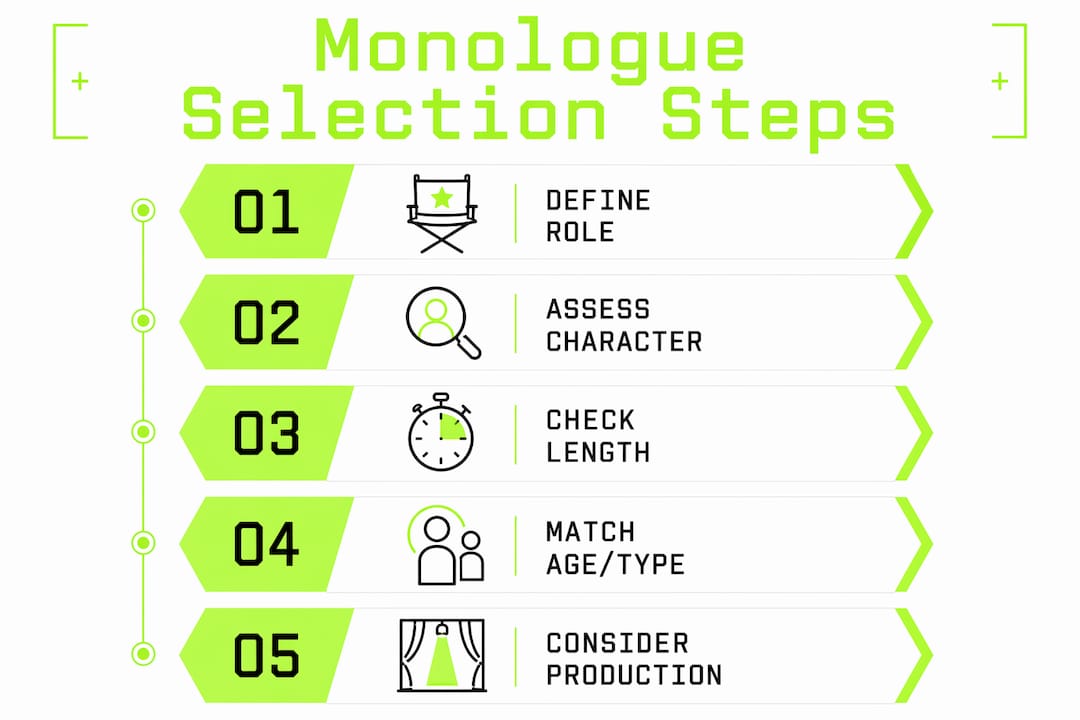
Age and type alignment is non-negotiable. Actors should portray characters they can convincingly inhabit now, not in five years. A misaligned choice signals a lack of self-awareness, which is its own casting red flag.
Production-specific selection is where many actors slip up. A theatre audition calls for different material than a screen test. Encourage actors to bring pieces that live in the same world as your project.
Pro Tip: When an actor submits a self-tape monologue, watch it back without sound first. If the story is still legible through body language and expression alone, the physical storytelling is working.
Common mistakes worth flagging: choosing material the actor loves rather than material that serves the role; overloading a short piece with too many stylistic choices; and switching monologues at the last moment, which typically delivers the new piece at a fraction of its potential.
Sofiavicedomini's work across film, television, theatre, and live events reflects exactly this discipline: emotionally complex portrayals grounded in authentic character objectives rather than performance for its own sake.
Key Takeaways
Effective monologue selection reveals actor suitability through clear storytelling, active objectives, appropriate length, and material matched to the production's world.
| Point | Details |
|---|---|
| Active character objective | The character must want something specific from someone, with immediate stakes and shifting tactics. |
| 60–90 second limit | Panels form impressions fast; attention drops sharply beyond two minutes. |
| Avoid iconic material | Famous monologues invite unhelpful comparisons to established performances. |
| Match production type | Theatre demands presence and technique; film and TV reward subtlety and naturalism. |
| Type and age alignment | Material must fit who the actor is right now, not who they aspire to play. |
FAQ
How long should an audition monologue be?
Aim for 60–90 seconds. Panels often form a view within the first ten seconds, and attention declines sharply after two minutes.
Why should actors avoid famous monologues?
Iconic material carries the weight of previous performances, making unfavourable comparisons almost inevitable regardless of the actor's skill.
What makes a character objective strong in a monologue?
The character should want something specific from a specific person, with urgent stakes and tactics that visibly shift across the piece.
How does production type affect monologue choice?
Theatre auditions reward technical presence and projection; film and TV auditions favour subtlety, restraint, and screen-realistic naturalism.