How to cast professional actors for your short film

If you need to cast a short film properly, the route is simple: write a tight brief, post it where trained actors actually look, give applicants a 48 to 72 hour self-tape window, shortlist fast, callback your top two or three for chemistry, then lock the engagement with clear rights and payment terms before anyone steps on set. Budget accordingly. Casting director fees for indie shorts commonly run from a few hundred to a few thousand dollars depending on complexity, and if you're working with union talent, note the SAG-AFTRA and Equity clocks start ticking early. If you'd rather skip the open call entirely, you can view my showreel and get in touch directly to discuss your role.
- Write the brief with emotional intent, not just physical description
- Post to targeted channels, not generic job boards
- Set a 48 to 72 hour self-tape deadline and stick to it
- Callback only your genuine contenders for chemistry
- Sign before shooting, not during
Key Takeaways
Effective short film casting depends on a tight brief, matched discovery channels, a staged audition process, and contracts that name usage rights before the shoot begins.
| Point | Details |
|---|---|
| Budget realistically | Indie casting fees commonly range from a few hundred to a few thousand dollars depending on complexity. |
| Plan union timelines early | SAG-AFTRA signatory applications need submitting 4 to 6 weeks before principal photography. |
| Write emotionally specific briefs | Describe what the character wants, not just their physical traits, to attract stronger submissions. |
| Stage your auditions | Use self-tapes to filter, then reserve in-person callbacks for testing chemistry and direction-taking. |
| Consider Sofia Vicedomini directly | Her theatrical background suits emotionally complex leads and fast-turnaround short-format roles. |
Table of Contents
- What does short film casting actually cost and how long does it take?
- How do you write a casting brief that attracts the right actors?
- Where should you look for professional short film talent?
- How do you test chemistry and direction-taking in auditions?
- What contract and rights terms should every short film cover?
- Sofia Vicedomini for emotionally complex short-film roles
- How do you confirm an actor's availability before you commit the schedule?
- How do you manage contracts covering usage rights and exclusivity?
- How do you handle a last-minute dropout or no-show?
- What should callback and follow-up communication look like?
- What I've learned sitting on both sides of the casting table
- Ready to book Sofia Vicedomini for your short film?
- Sources
- FAQ
What does short film casting actually cost and how long does it take?
Budget is the first honest conversation. Casting fees for indie shorts commonly range from a few hundred to a few thousand dollars, and complexity drives that spread more than runtime does. A two-hander drama with no union involvement sits at the low end. A project needing SAG-AFTRA signatory status, multiple rehearsal days, or a genuinely hard-to-cast role (heavy accent work, movement, a specific age range) pushes towards the top.
Timeline matters more than most producers plan for. If any performer is SAG-AFTRA affiliated, the union recommends submitting the signatory application at least 4 to 6 weeks before principal photography begins, including before rehearsals or travel. Miss that window and you either delay the shoot or lose access to that talent pool entirely.
A realistic sequence looks like this:
- Week 1: post the breakdown, open self-tape submissions
- Week 2: review tapes, schedule callbacks
- Week 3: confirm cast, begin signatory paperwork if needed
- Weeks 4 to 6: rehearsal and final clearance
- Week 6+: shoot
Agree usage rights and intended distribution (festival only, commercial, online) before the offer goes out. Renegotiating after a "yes" is where good relationships sour.
How do you write a casting brief that attracts the right actors?
A vague breakdown gets you a hundred submissions and none of them right. A specific one gets you twenty and three of them perfect.
Every electronic breakdown should include:
- Role name and type (lead, supporting, day role)
- Emotional intent of the character, not just physical description
- Scene demands (dialogue-heavy, physical, silent reaction work)
- Special skills required (accent, dance, combat, an instrument)
- Union status of the project and whether it accepts non-union submissions
- Shoot dates, location, and whether travel is covered
- Self-tape instructions: which sides, format, deadline
Describe the character by what they want and what stops them getting it, not by hair colour and height. Casting resources consistently note that production teams should prioritise emotional suitability and chemistry over a purely physical match, and a breakdown that invites interpretation rather than dictating it tends to surface actors who bring something you hadn't imagined.
For submissions, ask for a headshot, a reel no longer than two minutes, a CV, and a self-tape following your exact side and framing instructions. Triage in one pass: reel quality and self-tape instruction-following first, everything else second.
Pro Tip: If a submission ignores your slate instructions or framing request, that's a preview of how they'll take direction on set. Deprioritise it before you even watch the performance.
Where should you look for professional short film talent?
The channel you choose should match your budget and your tolerance for risk, not just your gut instinct about where "real actors" hang out.
Industry casting platforms give you the widest reach and are the standard first stop for most productions, particularly when you need coverage across several roles at once. Drama schools and local theatre communities tend to deliver more consistently trained performers, and because reputation matters within a small local scene, reliability is often higher. Personal referrals, meanwhile, from other producers, directors or casting directors, remain the highest-trust channel. Practical guides note that platform choice should generally match project budget and expected talent quality, with ultra-low-budget productions leaning on local networks and better-funded ones paying for wider platform coverage.
Screening checklist once submissions arrive:
- Watch the reel before the headshot; a strong reel with a mediocre photo beats the reverse
- Check that contact and representation details are complete and current
- Note vague or non-committal availability, an early red flag for reliability
- Be wary of anyone reluctant to confirm pay or usage rights before the audition
Experienced casting directors often lean on personal relationships with actors or their representation to bypass public listings entirely, which can cut lead time significantly for a hard-to-fill role. If you already have contacts, use them first. Combining a platform search with even one or two trusted referrals tends to produce a shortlist that holds up better once the shoot actually starts.
How do you test chemistry and direction-taking in auditions?
Run the process in stages, and don't skip straight to a full cast readthrough because it feels efficient.
- Self-tape filter first. This narrows a hundred submissions down to a manageable shortlist without burning a single hour of studio or Zoom time. Self-tapes work best as a first-round filter, not a final decision tool.
- Scheduled individual audition. Give real sides in advance, not on the day, and watch how each actor has interpreted the emotional intent from your breakdown.
- Chemistry callback for leads. Pair your top two or three contenders and watch how they listen, not just how they perform their own lines.
If a role needs filling within days, skip straight to in-person auditions. Self-tape review takes time you may not have.
In callbacks, test responsiveness to direction rather than a second static reading. Give a note, ask them to run it again differently, and watch how quickly they adjust. A focused callback built around improvisation reveals coaching responsiveness far more reliably than three versions of the same read.

Pro Tip: Score each callback on three criteria only: listening, adjustment speed, and emotional repeatability. Three clean scores beat a gut feeling you can't defend to your producer.
Set a decision deadline before the callback starts, so a strong first audition doesn't get overshadowed by decision fatigue after the fifth.
What contract and rights terms should every short film cover?
Get this wrong and you'll be renegotiating usage rights the week before a festival deadline, which is the worst possible time.
Equity publishes template forms of engagement for shorts and festival-circuit films, covering minimum daily or weekly pay recommendations, rehearsal payment, and performer protections around nudity or simulated sex scenes. If any cast member is SAG-AFTRA, the Short Project Agreement carries its own paperwork and the 4 to 6 week signatory lead time applies regardless of how small the role is.
Cover these before the shoot, not during:
- Fee, payment timing, and any pension and health contribution where applicable
- Rehearsal pay if rehearsal days are required
- Named intended usage: festival only, online distribution, or commercial resale
- Consent protocols for any sensitive content, agreed in writing before the audition, not on the day
Naming the intended use up front, rather than leaving it vague, is the single easiest way to avoid a costly renegotiation once the film is finished and heading to festivals.
Sofia Vicedomini for emotionally complex short-film roles
I bring a strong theatrical foundation to camera work, which is exactly what a short film needs: no time to build a character slowly, so the emotional truth has to arrive fast and hold.
- Suited to emotionally complex leads, dramatic two-handers, and roles demanding tonal range within a short runtime
- Comfortable across cinema, commercials, and interactive theatre formats
- Trained to take direction quickly and repeat a performance beat for beat across takes
Send a booking enquiry with your project summary, shoot dates, and proposed fee and usage terms, and view the full showreel and contact details here.
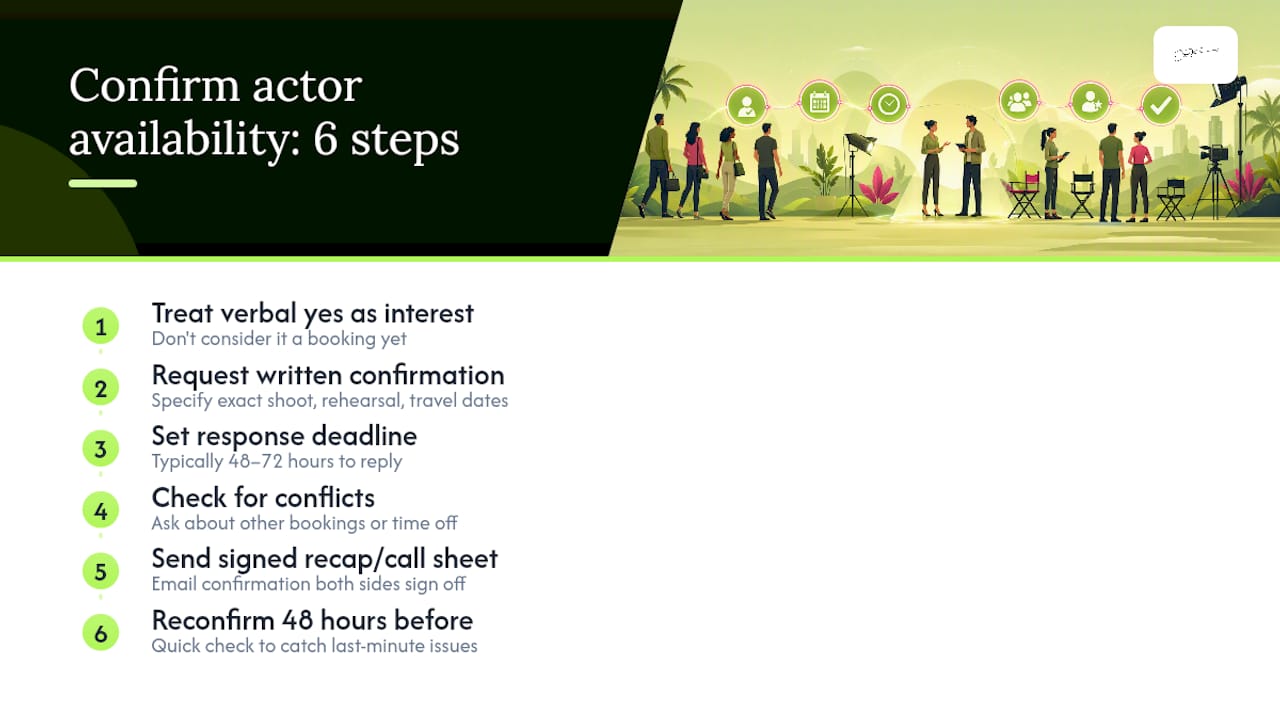
How do you confirm an actor's availability before you commit the schedule?
A verbal "yes" at the callback stage is not a confirmed booking. Treat it as interest, not commitment, until it's in writing against your actual production dates.
Once you've made an offer, ask for written confirmation against the specific shoot dates, not just a general "I'm free that month." Actors juggling multiple projects (which most working professionals are) sometimes hold soft commitments to more than one production at once, so a specific date-by-date confirmation, including any rehearsal or travel days, closes that gap.
Build in a short response deadline on your offer, typically 48 to 72 hours, so you're not left waiting while a preferred actor weighs up a better-paying job elsewhere. If they can't confirm within that window, move to your second choice rather than letting the schedule drift.
For any role with more than a day's commitment, ask directly about conflicting bookings, other productions currently in negotiation, and any planned time off during your shoot window. This isn't intrusive; it's standard due diligence, and a professional actor will expect the question.
Once confirmed, send a written call sheet or availability recap that both sides sign off on, even informally by email. This becomes your reference point if a dispute over dates arises later, and it gives the actor a clear record of what they agreed to.
Reconfirm 48 hours before the shoot itself. Schedules shift, illness happens, and a quick check-in catches most problems before they become an on-the-day crisis.
How do you manage contracts covering usage rights and exclusivity?
Usage rights and exclusivity clauses cause more post-production headaches than almost anything else in short film production, mainly because they get treated as boilerplate rather than negotiated properly.
Name the intended use explicitly in the contract: festival submission only, online release, broadcast, or commercial resale. These are different rights with different value, and naming the use up front prevents a costly renegotiation later if your short unexpectedly gets picked up for wider distribution.
Exclusivity works differently for shorts than for feature or commercial work. Most short film contracts don't require full exclusivity from the performer, since the shoot window is brief, but you should still specify whether the actor can discuss or promote the project publicly before release, and whether any conflicting brand or competitor work during the shoot period is restricted.
If your short may later be extended, remade as a feature, or repurposed commercially, say so in the contract now. An option clause covering future use, with a clear fee structure attached, costs little to include and saves a difficult negotiation if the project takes off.
Keep the contract itself template-based rather than bespoke wherever possible. Equity's engagement forms cover most of this ground reliably, and starting from a recognised template reduces the chance of missing a clause that only becomes a problem after the film is finished and travelling the festival circuit.
How do you handle a last-minute dropout or no-show?
Assume it will happen on at least one production, because it will. Casting a genuine backup, not just a mental shortlist, for every lead role is the difference between a one-day delay and a scrapped shoot date.
Keep your second-choice callback candidate warm even after you've made your offer to the first choice. A brief, polite message letting them know they were strongly considered and asking if they'd be available as a contingency costs nothing and gives you a real option if things fall through.
Build a short buffer into your schedule, particularly around the first shoot day, when nerves and logistics are most likely to derail a new commitment. If a performer no-shows without contact on the day itself, have your assistant director's number ready to reach out immediately rather than waiting to see if they turn up late.
For any role carrying real weight in the story, avoid casting a single point of failure with no backup plan at all. A short scene reshoot with a replacement actor is disruptive but recoverable; a full day lost to an empty set is not.
Written confirmations, deposits where appropriate, and the 48-hour reconfirmation habit mentioned earlier all reduce the odds of a dropout happening in the first place. Prevention is cheaper than the recast.
What should callback and follow-up communication look like?
How you handle the gap between audition and decision shapes your production's reputation within the local acting community, and that reputation follows you to your next casting call.
Send a genuine acknowledgement within a few days of every self-tape or in-person audition, even a brief one. Silence reads as disorganisation, and actors talk to each other about which productions communicate properly and which ones disappear.
For callbacks, give clear logistics well in advance: which sides to prepare, whether it's paired with another actor, expected duration, and format (in-person or video call). Ambiguity at this stage creates avoidable stress for performers who are already managing multiple auditions.
Once a decision is made, tell everyone who auditioned, not just your final choice. A short, polite decline message takes two minutes and keeps the door open for a future role that might suit them better. Actors remember which productions bothered to close the loop.
If you're holding a candidate as a genuine backup, say so directly rather than leaving them uncertain. Clarity, even when the news isn't what someone wants to hear, is what professional actors consistently rate highest in how a production handles them.
What I've learned sitting on both sides of the casting table
The productions that get the best performances out of me are never the ones with the biggest budget. They're the ones that send a clear brief, give honest feedback on time, and pay fairly without me having to chase an invoice three times.
On set, what actually improves a performance is simple: a few minutes of rehearsal before the camera rolls, direction that's specific rather than vague ("more urgency here" beats "just feel it more"), and a crew that treats the actor's time with the same respect as the director's shot list.
If you want a quick checklist for your next production email to actors: confirm the sides in advance, state the pay and usage terms plainly, and give a realistic response deadline. It costs you nothing and it tells every actor reading it that you know what you're doing.
Ready to book Sofia Vicedomini for your short film?
If your brief calls for a performer who can carry emotional weight in a handful of scenes rather than two hours of runtime, that's precisely the work I'm built for. Short-format storytelling rewards an actor who arrives prepared and adjusts fast, and that's the standard I hold myself to on every project, whether it's a festival drama, a commercial, or interactive theatre.

When you send an enquiry, include your project brief, proposed shoot dates, fee offer, and intended usage (festival, online, commercial). That's everything needed to give you a fast, informed answer rather than a round of back-and-forth. Visit my booking page and showreel to check availability and send your project details directly. I aim to respond to genuine production enquiries within a few working days.
Sources
- Indie short film casting pointers
- Film producing: how to cast the right actors in your film
- Short Project (SPA) — getting started
- A guide to working on shorts and festival circuit films
- What a casting director wants you to know for your short film
FAQ
How much does it cost to cast a professional actor for a short film?
Casting fees for indie shorts typically run from a few hundred to a few thousand dollars, depending on complexity, rehearsal needs, and union status.
How far in advance should I start casting for a short film?
Start at least six weeks out if any role involves SAG-AFTRA talent, since the signatory application needs submitting 4 to 6 weeks before principal photography.
Should I use self-tapes or in-person auditions for a short film?
Use self-tapes as your first-round filter, then move to in-person or live video callbacks for chemistry testing on lead roles; this hybrid approach is standard industry practice.
What should a casting brief for a short film include?
Include the role's emotional intent, scene demands, special skills, union status, shoot dates, and clear self-tape submission instructions.
Can I book Sofia Vicedomini directly for a short film role?
Yes. Send a project brief with your dates, fee offer, and intended usage through her official booking page for a direct response.