Site-specific theatre acting: your practical UK guide

Site-specific theatre acting asks you to do something no conventional stage prepares you for: perform with full presence inside a space that was never designed for you. The work demands improvisation, spatial intelligence, sustained physical and vocal stamina, and the ability to hold character when a stranger walks through your scene or a pigeon lands on your set. Practitioners like Mike Pearson of Brith Gof built careers on exactly this principle — that the site is not backdrop but co-author.
Here is what the form asks of you, at a glance:
- Improvisation: respond to unscripted audience behaviour and environmental interruptions without breaking the fictional world.
- Spatial intelligence: read a room, a courtyard, or a forest and adapt your blocking in real time.
- Sustained presence: hold attention without a proscenium frame to focus the audience's gaze.
- Flexible voice: project across a warehouse, then drop to near-whisper for a corridor scene moments later.
- Physical stamina: repeat performances across multiple locations, often outdoors, sometimes in challenging weather.
Key takeaways
Site-specific theatre acting succeeds when you combine spatial intelligence, improvisation, and sustained physical presence with thorough pre-rehearsal research and a clear logistics plan.
| Point | Details |
|---|---|
| Spatial intelligence is foundational | Walk and map the site before any scripted rehearsal to build a movement vocabulary from its architecture. |
| Improvisation drives casting decisions | Directors prioritise actors who can sustain character through live audience interaction and unscripted moments. |
| Submission materials need tailoring | Lead your CV and reel with devised, ensemble and proximity work; include a site-aware cover note. |
| Safety is a shared responsibility | Confirm risk assessment, public liability insurance and weather contingency before your first site visit. |
| Sofiavicedomini's approach | Combines pre-rehearsal dramaturgy research, solo presence practice, and a personal site-contact checklist for every production. |
Table of Contents
- What is site-specific theatre, and what forms will you encounter?
- What acting techniques does site-specific work actually require?
- How does casting for site-specific projects differ?
- How do you rehearse when the site is the script?
- What logistics and safety should you know about?
- What should you pack for a site-specific show?
- How does Sofiavicedomini prepare for a site-specific role?
- How do you find site-specific work in the UK?
- Why site-specific work matters to me
- Work with a performer who lives this practice
- Sources
- FAQ
What is site-specific theatre, and what forms will you encounter?
Site-specific theatre is a production performed in a unique, often non-theatrical location that uses the site's properties to amplify storytelling rather than relying on a traditional stage. The site is not a neutral container; it is active scenography. A Wikipedia overview of the form confirms it covers found-space and promenade formats, among others.
The main forms you will encounter in UK casting calls:
- Found-space performance: a script staged inside an existing location (a derelict factory, a stately home) whose architecture shapes the design.
- Promenade: audiences move through the space alongside performers, following the action from room to room or area to area.
- Environmental theatre: the entire environment, including lighting, sound and architecture, is treated as part of the dramatic world.
- Immersive theatre: audiences interact directly with performers; the line between spectator and participant blurs.
- Site-adaptive work: a piece originally created for one site is carefully adapted for a new location while preserving its core vocabulary.
Site-specific performance also aims to engage with the meaning and history of a site, reaching audiences who might not otherwise attend theatre at all.
What acting techniques does site-specific work actually require?
Improvisation and live audience interaction
Improvisation is not a fallback skill here; it is the engine. You will face audience members who ask questions, wander off-script, or simply stand in your eyeline. Warm up with a "yes, and" circle before every run-through, then add a constraint: respond in character to a random object a fellow actor hands you. That small pressure replicates the unpredictability of live site work.

Embodied presence and atmospheric performance
Research from UAL shows that atmospheric performance shifts emphasis from projection to proximity: micro-gesture, breath control and active listening replace the broad strokes that read from Row G. Practise stillness exercises where you hold a single intention for 60 seconds without moving, letting the space carry the weight. A site-specific approach creates natural sets that increase intimacy and immersion, which means your internal life becomes far more visible than it would on a lit stage.
Spatial awareness and movement vocabulary
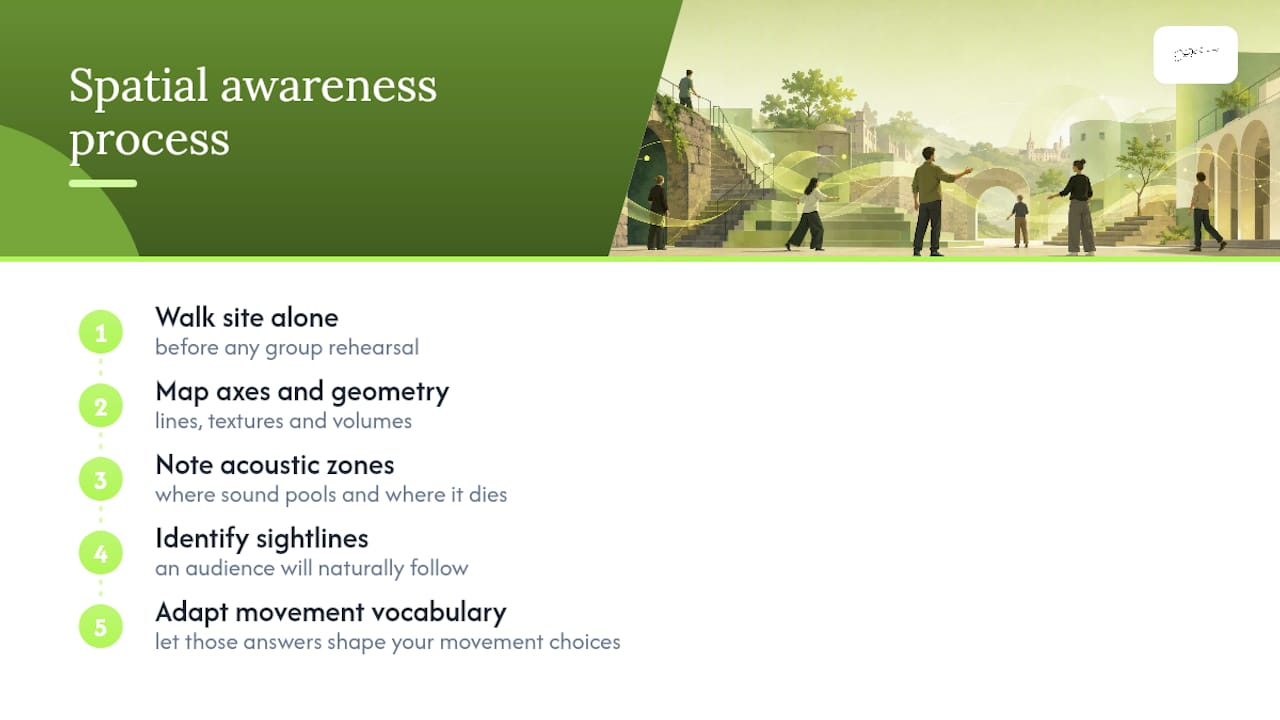
Theatre Topics advises practitioners to dialogue with architecture: ask what the lines, textures and volumes of a space "say," then let those answers shape your movement choices. Walk the site alone before any group rehearsal. Map the axes, note where sound pools and where it dies, identify the sightlines an audience will naturally follow.
Vocal adaptation for variable acoustics
Outdoor and unconventional spaces punish a one-size voice. Practise projecting to a partner 20 metres away, then immediately drop to a conversational register for a partner one metre away. Body microphones are common in larger immersive productions; know how to place a lav mic yourself, avoid costume rustle, and never cup a handheld.
Pro Tip: When an audience member interrupts mid-scene, treat their intrusion as a gift the character would receive, not a problem the actor must solve. A brief, in-character acknowledgement keeps the fictional world intact and often delights the rest of the audience.
For physical and vocal care across a run: warm up your voice with lip trills and sirens before each performance, stretch your feet and lower back after, and build a 10-minute cool-down walk into your post-show routine.
How does casting for site-specific projects differ?
Casting for immersive and site-specific work increasingly values improvisation, proximity performance skills and digital audition materials such as reels and virtual casting submissions. Your CV should foreground ensemble credits, devised work, and any outdoor or promenade experience before listing conventional stage roles.
Submission template for a site-specific brief:
- Headshot: a clean, recent image; avoid heavy theatrical make-up that obscures your natural range.
- CV: lead with site-specific, immersive or devised credits; include any physical theatre or movement training.
- Reel: 60–90 seconds showing proximity work, improvised interaction, or physical character work in non-studio settings.
- Cover note (3–4 sentences): name the specific site or form referenced in the brief; describe one relevant experience; confirm your availability for site visits and flexible rehearsal schedules.
Casting notices often specify genre-specific training (verse skills, physical theatre) and may require virtual audition steps. Prepare for cold reads in unfamiliar layouts, short improvised interactions with the director or a reader, and brief physical tasks that test your spatial responsiveness.
Audition checklist:
- Research the site before you arrive; look at photographs or visit if possible.
- Wear clothes you can move freely in; avoid restrictive footwear.
- Prepare a short monologue that works in close proximity, not at distance.
- Bring a printed CV and a digital reel link.
- Expect callbacks 2–4 weeks after initial auditions for small-to-medium UK projects; rehearsal periods typically run 3–6 weeks.
How do you rehearse when the site is the script?
Dramaturgy packets, hot-seating and audience-management rehearsals are the practical backbone of site-specific preparation. Here is a phased approach:
- Exploration: walk the site without a script. Note emotional responses, textures, smells, sounds.
- Mapping: create a shared floor plan marking audience flow routes, performer stations, and acoustic zones.
- Vocabulary-building: improvise short scenes using only the site's features as stimulus; no props brought from outside.
- Hot-seating: each performer sits in character while the ensemble asks questions an audience member might ask; this builds resilience for live interaction.
- Audience-management run-throughs: rehearse with a live "audience" of colleagues who move unpredictably, block sightlines and ask questions mid-scene.
Site-mapping checklist for rehearsal teams:
- Entry and exit points for performers and audiences.
- Emergency evacuation routes and assembly points.
- Acoustic dead zones and echo-prone areas.
- Power source locations for any technical equipment.
- Weather shelter options for outdoor sections.
- Accessibility routes for audience members with mobility needs.
What logistics and safety should you know about?
UK site-specific productions involve multiple stakeholders: the site owner, the local authority (for public land or listed buildings), and sometimes the emergency services for large-audience events. As a performer, you are not usually responsible for securing permissions, but you should confirm they exist before your first rehearsal.
Safety checklist for performers:
- Ask the producer for a copy of the risk assessment before the first site visit.
- Identify the first-aider on every call day.
- Know the weather contingency plan: indoor fallback, performance cancellation threshold, and who communicates changes to the audience.
- Check that public liability insurance covers performers; in the UK, the producer typically holds this for small and medium projects.
- Confirm accessible audience routes and any areas that are off-limits.
Pro Tip: Ask the stage manager for a site-contact sheet on day one: site owner's number, local authority liaison, and the nearest A&E. Knowing this yourself means you can act quickly if something goes wrong during a performance.
Budget awareness matters too. Small UK site-specific projects often operate on tight margins; ask about transport reimbursement, rehearsal space hire dates, and whether the run spans multiple weekends before you sign.
What should you pack for a site-specific show?
Your kit needs to work across changing conditions and quick transitions.
Performer packing checklist:
- Sturdy, non-slip footwear appropriate to the surface (cobbles, grass, concrete).
- Layered costume pieces that allow quick removal or addition for weather changes.
- A waterproof layer for outdoor calls.
- Small first-aid kit: plasters, pain relief, blister pads.
- Quick-change items in a labelled bag: spare tights, safety pins, a neutral base layer.
- Phone fully charged with the stage manager's number saved.
Tech and transport notes:
- Arrive at least 30 minutes before the audience call to complete a site check.
- Label all personal kit with your name and the production title.
- If you are wearing a body mic, carry spare batteries and a small cloth to reduce sweat interference.
- Walkie-talkies or a group messaging app (WhatsApp is standard on small UK productions) keep the team coordinated across split locations.
For costume and props: avoid anything with sharp edges or trailing fabric that could catch on uneven surfaces, and always test prop safety on the actual site surface before the first audience run.
How does Sofiavicedomini prepare for a site-specific role?
My preparation begins well before the first rehearsal call. I research the site's history, gather photographs, and build a short dramaturgy packet: a few pages of notes on the space's emotional register, its architectural features, and any community or cultural associations that might inform the character.
On the first site walk, I follow a personal checklist:
- Site owner and stage manager contact details saved to my phone.
- A printed floor plan with my performance zones marked.
- Notes on the site's history and any community significance.
- A mobility plan: where I enter, where I wait, and three possible routes if an audience cluster blocks my primary path.
The exercise I return to most is a five-minute solo presence practice: I stand in one area of the site, breathe, and let the space speak before I impose any character intention on it. It sounds simple, but it consistently shifts my performance from "acting in a space" to "belonging to a space." For improvisation under pressure, I remind myself that the character does not know the scene is going wrong; only the actor does.
Pro Tip: Before your first site walk, read one piece of writing about the location — a local history article, a planning document, anything. That single layer of context gives your character a richer relationship with the space from the very first rehearsal.
How do you find site-specific work in the UK?
Site-specific companies partner with heritage sites, cultural institutions and community organisations and often run regional audition seasons. The UK scene is active; here are practical steps to get into it:
- Check The Stage, Arts Jobs and IdeasTap for site-specific casting calls; filter by "devised," "outdoor" or "immersive."
- Contact local heritage organisations (English Heritage, National Trust) directly; many commission or co-produce site-specific work and welcome performer enquiries.
- Volunteer as a steward or production assistant on a site-specific show to observe rehearsal methods first-hand.
- Pitch yourself to community theatre companies running festival or outdoor seasons; a short, tailored cover note referencing the specific site or community context goes further than a generic application.
For your reel, include any clip that shows you working in close proximity to a camera or audience, navigating an unconventional space, or sustaining character through an unscripted moment. Participatory art practices in gallery contexts offer transferable experience worth mentioning in a cover note, particularly for immersive or interactive briefs.
Why site-specific work matters to me
The most alive I have ever felt on stage is in a space that was not built for performance. There is a particular electricity when an audience member realises the scene happening beside them is real theatre, not ambient decoration. Mike Pearson and Brith Gof understood this decades ago: the site is not just a setting but a collaborator that holds memory, texture and meaning no designed set can replicate. As an Italian performer working across European contexts, I find that site-specific practice sharpens every other skill I have, because it strips away every safety net and asks you to be genuinely present. That is the fuel I carry into every other project.
Work with a performer who lives this practice
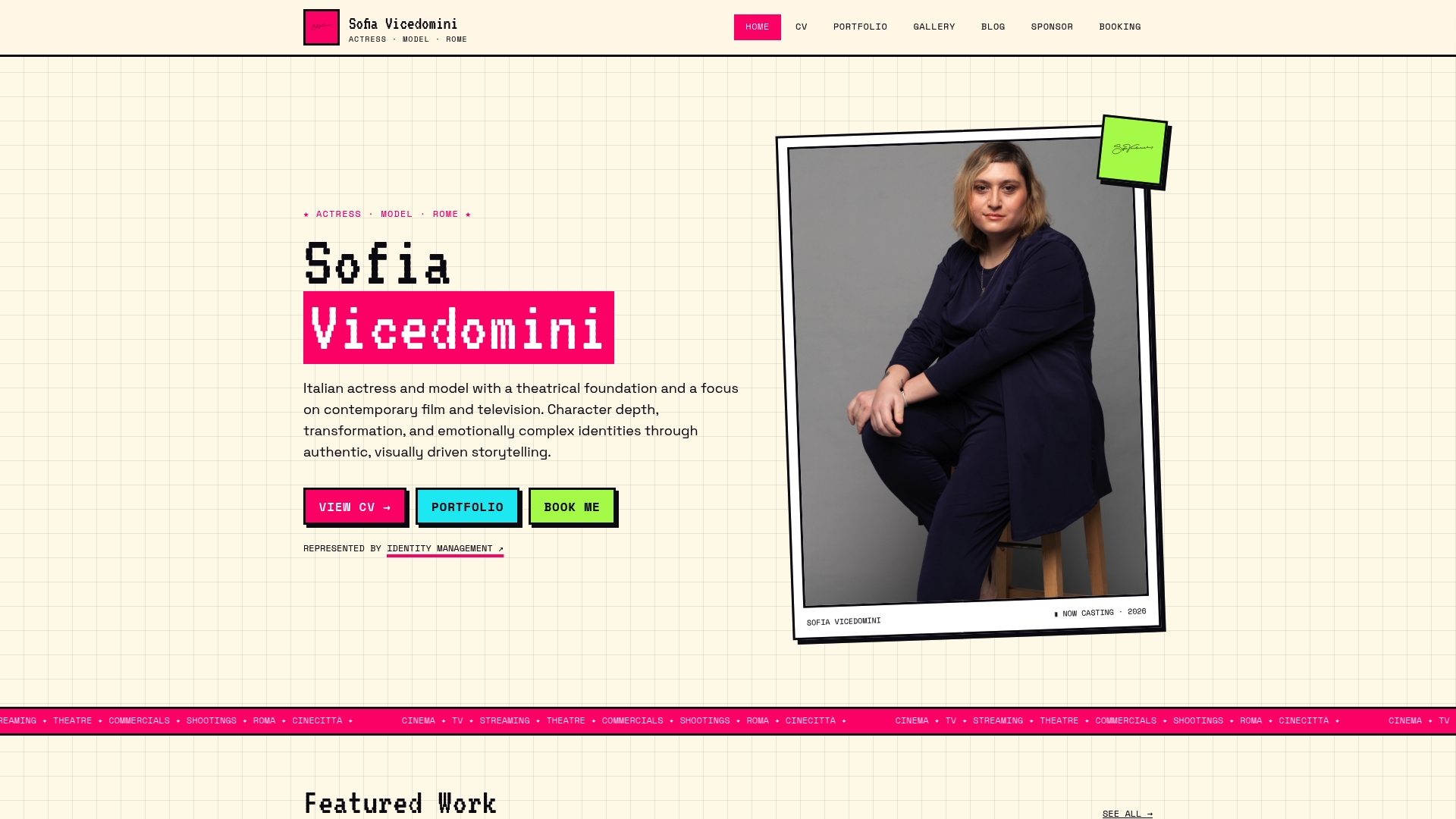
If you are a casting director, theatre company or event producer looking for a performer who brings genuine site-specific experience to every brief, Sofia Vicedomini offers exactly that: emotionally complex character work, proven adaptability across found-space and immersive formats, and the physical and vocal range to hold presence in any environment. From intimate promenade pieces to large-scale interactive productions, Sofia's preparation is thorough, her collaboration instinct is strong, and her commitment to the work is total. To discuss your next project or request a submission pack, visit Sofiavicedomini and get in touch directly.
Sources
- Site-specific theatre — Playwright glossary
- “Beralas Bumi Beratap Langit”: An investigation of creating role and space through site-specific methods — Mudra Jurnal Seni Budaya (2022)
- Four principles for creating site-specific performance | Theatre Topics (JHU)
- Preparing and Performing Site-Specific Immersive Work | HowlRound Theatre Commons
- Site-specific theatre — Wikipedia
- Inside Immersive Theatre with Jasmine Bowen: The skills, trends, and tech shaping stage casting in 2026 • allcasting
- Abbess in site-specific, immersive The Comedy of Errors in Battery Park, Manhattan. | Playbill
- Plays in Place — Auditioning across New England (Plays in Place site)
FAQ
What skills do casting directors look for in site-specific theatre?
Directors prioritise improvisation, proximity performance, spatial awareness and the ability to sustain character through live audience interaction. Digital audition materials, including reels showing close-range or unconventional-space work, are increasingly requested.
How long are rehearsal periods for UK site-specific projects?
Small-to-medium UK site-specific productions typically rehearse for 3–6 weeks, with callbacks arriving 2–4 weeks after initial auditions. Rehearsal schedules often include dedicated site-walk sessions before any scripted run-throughs begin.
What should I include in a site-specific theatre casting submission?
Include a recent headshot, a CV leading with devised or immersive credits, a 60–90 second reel showing proximity or physical character work, and a short cover note that references the specific site or form named in the casting brief.
Do performers need their own public liability insurance for site-specific work?
In the UK, the producer typically holds public liability insurance for small and medium productions. Always confirm this before your first site visit, and ask to see the risk assessment for the specific location.
What is the difference between found-space and promenade theatre?
Found-space theatre stages a production inside an existing non-theatrical location, using its architecture as scenography. Promenade theatre moves the audience through the space alongside performers, so the action unfolds across multiple areas rather than in a fixed configuration.